Repeat Prenatal STI Screening and Treatment May Reduce Preterm Births
Posted on 02 Nov 2026
Preterm birth remains a major obstetric concern and is associated with serious complications in early childhood. Common sexually transmitted infections during pregnancy often cause no symptoms, making them difficult to identify through standard symptom-based care and leaving potentially treatable infections undetected. A new study highlights the potential value of broader detection, finding that repeated screening and treatment for these infections during pregnancy was associated with fewer preterm births.
Researchers at the University of Pennsylvania and the University of Southern California evaluated two approaches to screening and treating chlamydia, gonorrhea, and trichomoniasis during pregnancy. The first involved testing participants at their initial prenatal visit, treating detected infections, and performing a test-of-cure three weeks later for those treated. The second included screening and treatment at both the initial visit and between 30 and 34 weeks of pregnancy.
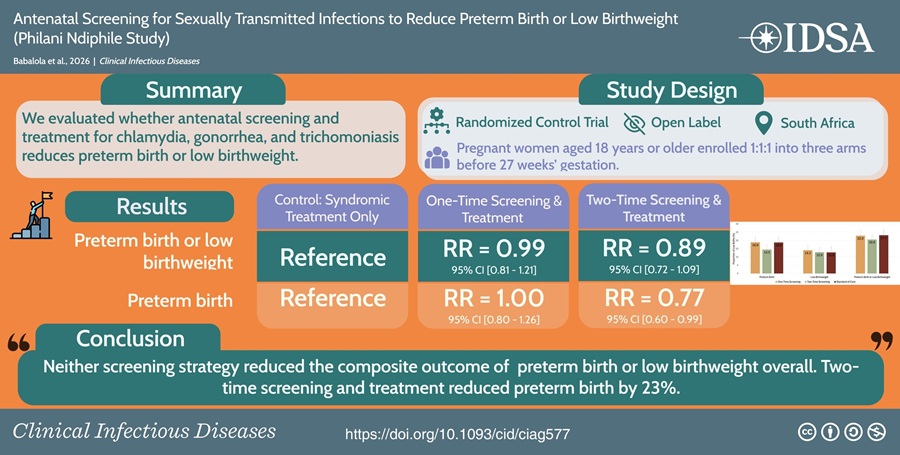
The randomized Philani Ndiphile Study enrolled 2,247 pregnant participants across four government health clinics in South Africa. Participants were assigned to first-visit screening and treatment, first-visit plus third-trimester screening and treatment, or standard symptom-based care. At baseline, approximately 27% tested positive for at least one of the three infections, and about 80% of infections caused no symptoms, highlighting the limitations of relying on symptoms alone.
Preterm birth occurred in 14.5% of participants screened twice, compared with 18.8% receiving standard care. In contrast, the rate in the one-time screening group was similar to that with standard care, at 18.9%. Repeat screening also identified infections later in pregnancy: 9.2% of participants tested in the third trimester were positive, including those with persistent, recurrent, or newly detected infections.
The twice-during-pregnancy approach did not significantly reduce the study’s primary combined outcome of preterm birth or low birth weight. It also did not reduce low birth weight when analyzed separately, and the authors cautioned that the preterm birth finding requires further study. The study was published in Clinical Infectious Diseases on October 27, 2026.
“Complications from preterm birth are among the leading causes of death among children under 5 years of age globally. This study suggests that testing for STIs during pregnancy could help us find and treat infections that might otherwise go unnoticed, and that screening more than once may be important for reducing the risk of preterm birth. Because most of the infections we found caused no symptoms, waiting for symptoms alone means we may miss an opportunity to intervene,” said Andrew Medina-Marino, Ph.D., adjunct associate professor of psychiatry at the University of Pennsylvania Perelman School of Medicine.
“The results give us an important signal, but they don't settle the question of how often pregnant patients should be screened. The next step is understanding when screening can have the greatest impact and which patients are most likely to benefit,” said Medina-Marino.
Related Links
University of Pennsylvania
University of Southern California