AI Pathology Approach Closely Aligns With Breast Cancer Genomic Risk Classification
Posted on 29 Oct 2026
In early-stage breast cancer, precision oncology relies on biological information to guide personalized treatment decisions. Because access to tissue-based genomic testing may be limited, there is growing interest in extracting clinically relevant information from routine pathology images. A newly validated investigational digital pathology approach has now demonstrated high concordance with an established genomic recurrence signature.
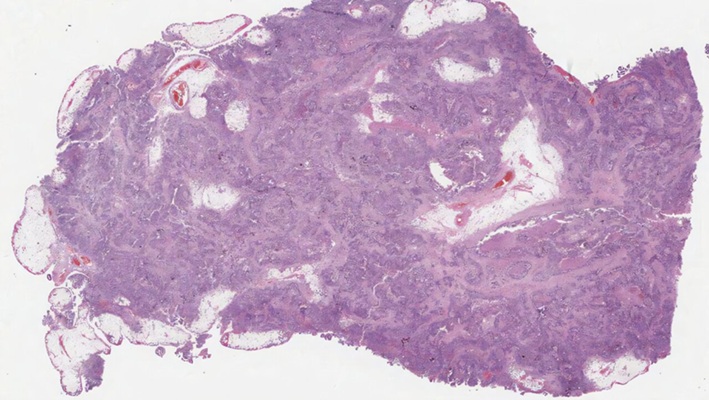
Agendia (Irvine, CA, USA) has presented clinical validation data for an investigational artificial intelligence-driven digital pathology approach based on the MammaPrint 70-gene recurrence signature. Presented at the European Society for Medical Oncology (ESMO) Congress 2026 in Madrid, the approach was developed to infer MammaPrint risk categories directly from hematoxylin and eosin (H&E)-stained whole-slide images.
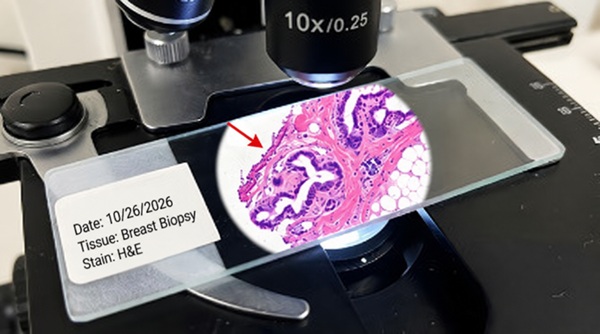
The investigational model was trained on 70,000 de-identified H&E-stained whole-slide images using MammaPrint-derived supervision. Its deep learning pipeline incorporated tissue detection, classification, and feature extraction using both self-supervised and supervised foundation models. The model generated a continuous recurrence score that was then used to classify patients into digital high-risk and digital low-risk groups.
Clinical validation used de-identified data from 372 patients with early-stage breast cancer enrolled in the prospective, real-world RASTER study, with a median follow-up of 10.3 years. The investigational digital assay showed high concordance with MammaPrint results, with a correlation coefficient of 0.954. Based on the digital classification, 49% of patients were categorized as high-risk and 51% as low-risk.
These classifications were also associated with long-term clinical outcomes. Patients in the digital low-risk group had a 10-year breast cancer-specific survival rate of 98.1%, compared with 86.7% among those in the digital high-risk group. Among the 274 patients with estrogen receptor-positive, HER2-negative disease, 10-year breast cancer-specific survival was 98.1% in the digital low-risk group versus 84.7% in the digital high-risk group. In multivariable analysis, digital risk classification was the only independent predictor of breast cancer-specific survival, with similar associations observed for distant recurrence-free intervals.
“AI-driven digital pathology approaches have the potential to expand access to genomic information for breast cancer patients globally, particularly in scenarios where access to tissue-based genomics is limited. This research brings together decades of genomic science with emerging digital pathology capabilities and reflects our commitment to developing innovative approaches to understanding tumor biology,” said William Audeh, M.D., M.S., Chief Medical Officer at Agendia.
Related Links
Agendia






.jpg)