AI Pathology Tool Predicts DNA Repair Deficiency in High-Grade Serous Ovarian Cancer
Posted on 24 Oct 2026
High-grade serous tubo-ovarian carcinoma is an aggressive cancer arising in the ovaries or fallopian tubes. Some tumors exhibit homologous recombination deficiency (HRD), a feature reflecting impaired DNA repair. Identifying HRD currently requires sophisticated genetic analysis that can be costly, time-consuming, and difficult to access in lower-resource settings. A new study points to a potentially more accessible approach, showing that artificial intelligence can identify signs of HRD from routine tissue images.
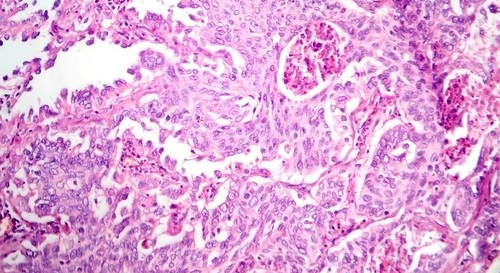
King’s College London researchers developed HRDPath, an explainable multi-model deep learning architecture that predicts HRD from histopathology images. The system evaluates high-resolution digital microscopy images of tumor tissue rather than analyzing DNA directly. To train it, the team used tissue images from patients whose HRD status had already been established through genomic analysis. This allowed HRDPath to learn visual features that distinguish HRD-positive from HRD-negative cancers.
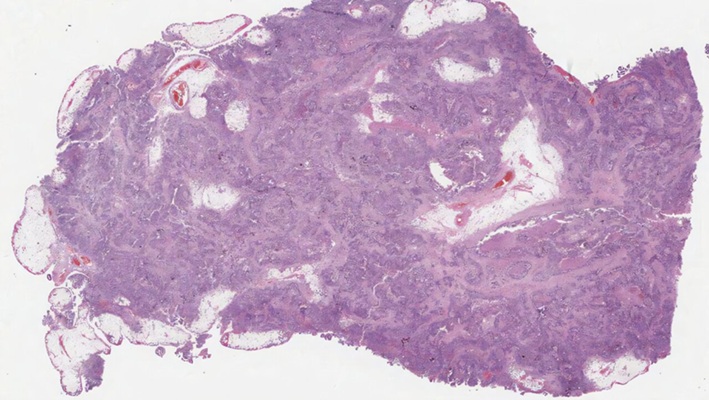
The study focused on high-grade serous tubo-ovarian carcinoma, assessing whether image-based analysis could identify tumors with defective DNA repair mechanisms. HRD can result from mutations in genes such as BRCA1 and BRCA2, which leave cancer cells less able to repair DNA damage. This weakness can make the cells more vulnerable to platinum-based chemotherapy and poly(ADP-ribose) polymerase inhibitors, making HRD a valuable biomarker for treatment selection.
HRDPath showed promising accuracy, particularly when several images from the same patient were considered. Under those conditions, it correctly identified approximately 91% of HRD-positive cases. The researchers also found that HRD-positive tumors showed subtle differences in cancer cell appearance and organization, including rounder cell nuclei and more densely packed cancer cells in some tumor regions. The findings were published in Nature Communications on October 21, 2026.
The researchers stated that further validation in larger patient populations is needed. They also said HRDPath could help reduce reliance on expensive genetic testing if HRD status can be reliably determined from tissue images already acquired for diagnosis. The work suggests that AI analysis may identify tissue-level changes linked to DNA repair defects that may be difficult to recognize by conventional examination.
“We are unlocking information hidden in microscopic images of cancer tissue that could transform how we match patients to treatments. By using AI to reveal defects in DNA repair, we could make precision cancer medicine faster, more affordable and accessible to more women with ovarian cancer, not just in the U.K. but around the world,” said Dr. Heba Sailem, reader in computational pathology at King’s College London.
Related Links
King’s College London