CSF Biomarker Meprin-Beta Increases in Alzheimer’s Disease
Posted on 20 Oct 2026
Alzheimer’s disease involves biological changes in the brain, including the accumulation of beta-amyloid. Cerebrospinal fluid provides access to molecules linked to nervous system processes, making it a valuable medium for investigating these changes. Extending this molecular understanding, new findings show elevated levels of meprin-β in both brain tissue and cerebrospinal fluid from people with Alzheimer’s disease.
The Institute for Neurosciences (Alicante, Spain), a joint center of the Miguel Hernández University of Elche and the Spanish National Research Council, led the study of meprin-β in Alzheimer’s disease. Meprin-β is an enzyme that can exist in immature inactive and mature active forms. The researchers analyzed these forms separately to determine how they change during disease progression.
Alzheimer’s disease involves processing of amyloid precursor protein by enzymes that include BACE1 and other beta-secretases, including meprin-β. The team studied frontal cortex samples from patients at different stages of Alzheimer’s disease and compared them with samples from people without Alzheimer’s disease. Samples were classified by Braak stage, a scale used to describe progression of pathology in the brain.
The active form of meprin-β increased in more advanced Braak stages, while this increase was not observed in early stages. The researchers also detected increased MEP1B messenger RNA at intermediate and advanced stages. In cerebrospinal fluid samples, they found increased levels of the active form of meprin-β in people with Alzheimer’s disease.
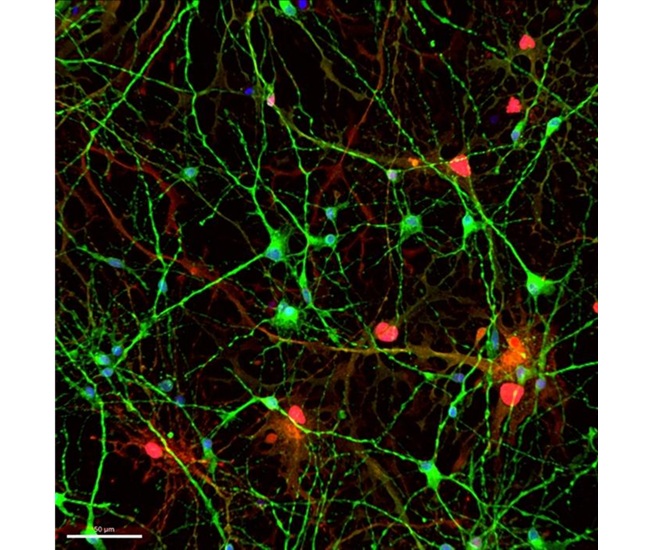
To examine a possible relationship with beta-amyloid accumulation, the team analyzed cerebrospinal fluid from transgenic rats that develop pathology associated with beta-amyloid accumulation. The active form of meprin-β was also increased in these animals. Human neurons derived from induced pluripotent stem cells showed a significant increase in meprin-β after exposure to the beta-amyloid peptide Aβ42.
The findings were published in Alzheimer’s Research & Therapy in 2026. The study involved the University Medical Center Mainz, the University of Barcelona and the University of Gothenburg. The authors suggest that meprin-β could be involved in processes related to amyloid precursor protein processing, while noting that further studies are needed to determine its potential use as an indicator of disease.
“Until now, much of the attention has focused on BACE1 as a relevant β-secretase in Alzheimer’s disease. Our work shows that there is another protein, meprin-β, whose active form is increased in the brain and cerebrospinal fluid of people with this disease,” said Javier Sáez Valero, a researcher at the Institute for Neurosciences and the study’s principal investigator.
“When we expose human neurons to beta-amyloid, we also observe an increase in meprin-β. This provides an experimental link between one of the hallmarks of Alzheimer’s disease and the alteration we have found in patient samples,” said Sergio Escamilla, first author of the study.
Related Links
Institute for Neurosciences