AI Tool Classifies Pathogenic Variants in Severe Childhood Epilepsy
Posted on 16 Oct 2026
Developmental and epileptic encephalopathies are rare neurodevelopmental disorders characterized by early-life seizures and significant developmental delays. Genetic testing can identify variants associated with these conditions, but many findings remain classified as variants of uncertain significance, complicating diagnosis and access to gene-targeted therapies. To improve interpretation, researchers have developed an artificial intelligence tool designed to classify potentially harmful variants in a gene linked to severe childhood epilepsy.
Northwestern Medicine (Chicago, IL, USA) researchers and collaborators developed EpiPred, a gene-specific machine learning model focused on STXBP1, one of the genes most commonly associated with developmental and epileptic encephalopathies. The model was trained to predict whether STXBP1 missense variants are likely to be disease-causing.
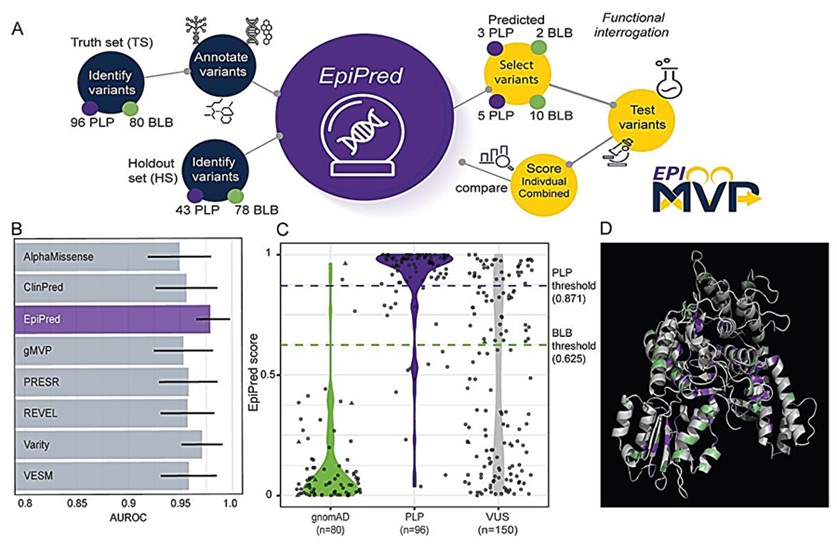
The model’s predictions were tested using multiple laboratory assays. These assays measured protein abundance, stability, solubility and interaction with other cellular components. The work combined computational methods with cellular and animal model systems to improve interpretation of epilepsy-related genetic variation.
Investigators evaluated roughly two dozen variants using four separate experimental assays in the original study. They also examined hundreds of known variants and predicted the impact of every possible STXBP1 missense variant. According to the findings, about one-quarter of variants currently classified as uncertain may be disease-causing.
EpiPred outperformed existing global variant prediction tools in accuracy, sensitivity and specificity. The model also aligned closely with experimental laboratory findings. The investigators identified several variants that may have been misclassified in previous studies.
The study was published in the Journal of Clinical Investigation on September 17, 2026. The research was conducted through a National Institutes of Health-funded collaboration between Northwestern Medicine, the University of Michigan, Weill Cornell Medicine and St. Jude Children’s Research Hospital. The tool has been made publicly available through an interactive web application for exploring predictions for STXBP1 variants.
Related Links
Northwestern Medicine