Molecular Test Detects Barrett’s Esophagus to Guide Endoscopy Referral
Posted on 16 Oct 2026
Barrett’s esophagus is the only known precursor to esophageal adenocarcinoma, yet it remains substantially underdiagnosed. Identifying at-risk patients for endoscopic evaluation is a key challenge in detecting the condition earlier. To support this initial assessment, a new non-endoscopic test uses molecular analysis of collected esophageal cells to help identify patients who should be referred for endoscopy.
Cyted Health’s (Cambridge, UK) EndoSign Barrett’s Esophagus Test is a non-endoscopic, methylation-based assay evaluated in the DETECT-ME study. Samples are collected using the FDA 510(k)-cleared EndoSign Cell Collection Device and analyzed in Cyted’s CLIA-certified, CAP-accredited U.S. laboratory. Positive findings are reported as “Barrett’s Signal Detected,” indicating the need for further evaluation.
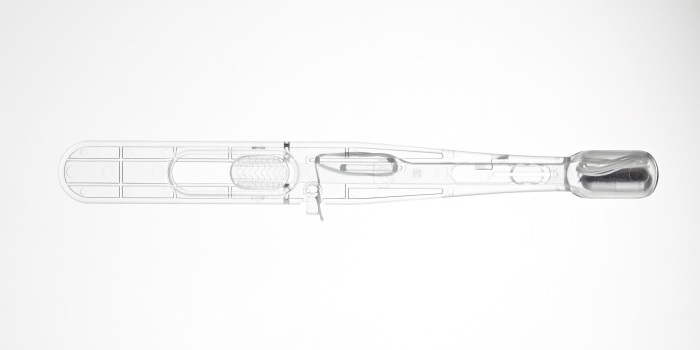
DETECT-ME was a prospective, multicenter study that compared the test directly with standard endoscopy and biopsy across 18 U.S. clinical sites. The findings were presented at the American College of Gastroenterology Annual Scientific Meeting in Nashville, Tennessee, during Plenary Session 4A: Esophagus / Practice Management on October 14, 2026.
Among 324 participants, the test achieved 90% overall sensitivity and 86% specificity for Barrett’s esophagus. Sensitivity reached 100% for dysplasia and esophageal adenocarcinoma and 99% for long-segment Barrett’s esophagus. Sample collection was successful in 95% of participants, with no device-related adverse events, while 82% rated tolerability as excellent.
These findings support the test’s intended role in identifying patients for diagnostic endoscopy. A “Barrett’s Signal Detected” result requires confirmatory endoscopic evaluation, and the assay does not replace that procedure. Instead, it is intended to help direct endoscopy resources toward patients most likely to benefit.
“Diagnosing Barrett’s esophagus with endoscopy isn’t where things break down. The gap is that too many people at risk never reach an endoscopy in the first place. With DETECT-ME, we now have U.S. validation of a simpler, more accessible way into the diagnostic process, so we can reach patients sooner, before their condition progresses and while surveillance and treatment can still have a real impact,” said Marcel Gehrung, CEO and Co-Founder of Cyted Health.
Related Links
Cyted Health