New NGS Suite Expands Clonality and MRD Research in Lymphoid Malignancies
Posted on 08 Oct 2026
Lymphoid malignancies require molecular tools that can distinguish clonal immune receptor rearrangements and track disease-related sequences over time. As immune receptor measurable residual disease analysis expands in oncology research centers, laboratories face growing pressure to improve DNA input capacity, throughput, reproducibility, and analytical performance. Against this backdrop, a newly launched test suite offers an automation-ready next-generation sequencing workflow for clonality assessment, somatic hypermutation analysis, and sequence-based measurable residual disease research.
Invivoscribe (San Diego, CA, USA) has launched the complete LymphoTrack Flex suite, an integrated next-generation sequencing solution for identifying and tracking immunoglobulin and T-cell receptor gene rearrangements. The suite is designed for clonality assessment, somatic hypermutation analysis, and sequence-based measurable residual disease research in lymphoid malignancies. It combines seven molecular targets, including IGHV leader, IGH FR1, IGH FR2, IGH FR3, IGK, TRB, and TRG, within one workflow.
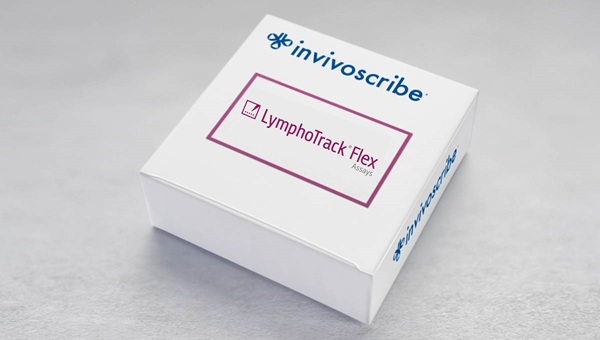
The technology uses massively parallel multiplexing with a bioinformatics engine to support objective analysis and tracking of clonal sequences. The workflow is intended to help laboratories characterize clonal populations at baseline and select sequence-specific clonotypes for longitudinal assessment. For data analysis, LymphoTrack Software supports local desktop-based workflows for laboratories running testing independently on a single workstation, while LymphoTrack Enterprise Software provides a centralized environment for high-throughput analysis, standardized reporting, and integration with laboratory and data infrastructures.
“Clonality, somatic hypermutation, and measurable residual disease provide complementary molecular insights across the course of lymphoid malignancies, with growing relevance as treatment approaches evolve beyond fixed-duration therapy toward more dynamic, MRD-informed strategies. LymphoTrack Flex enables laboratories to characterize clonal populations at baseline and select sequence-specific clonotypes for longitudinal assessments, providing a consistent molecular picture of disease over time to support the evaluation of these evolving treatment approaches,” said Brad Patay, Chief Medical Officer of Invivoscribe.
Related Links
Invivoscribe