Prototype Point-of-Care Test Aims to Improve Neonatal Sepsis Diagnosis
Posted on 09 Oct 2026
Neonatal sepsis remains difficult to diagnose because early signs can resemble other newborn conditions. Diagnostic delays may increase the risk of complications, death, long-term adverse outcomes, and inappropriate antibiotic use. Current early blood tests often require hospital-based analysis that may not be available outside tertiary centers. To support faster assessment, researchers now describe a point-of-care neonatal sepsis test designed to improve early diagnostic accuracy.
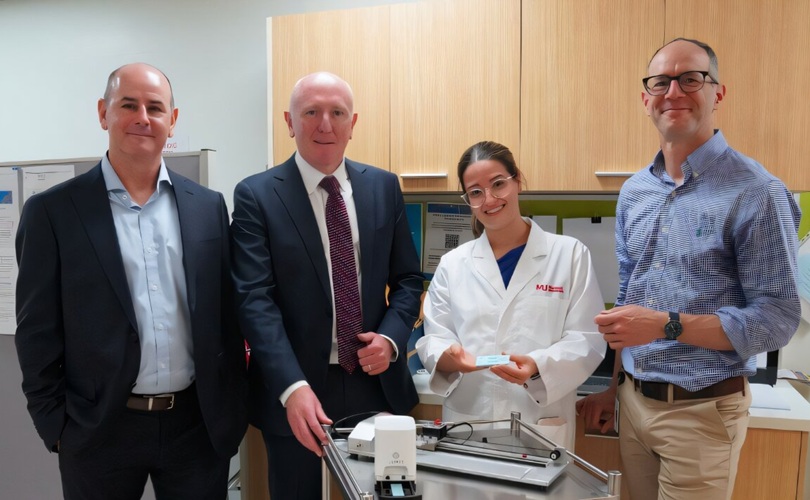
Murdoch University (Perth, Australia) is leading development of PreSep-4, a rapid point-of-care blood test for neonatal sepsis. The project is being conducted in partnership with the Child and Adolescent Health Service at King Edward Memorial Hospital Neonatology Services. The test is designed to work with Australian lateral flow assay detection technology and does not require specialist equipment.
PreSep-4 uses four biomarkers linked to the sepsis pathway. These biomarkers were identified through advanced proteomics and a machine learning-based diagnostic selection pipeline. They were discovered in Western Australian newborns enrolled in the international PROTECT trial.
The developers aim for the test to diagnose neonatal sepsis at the first suspicion of sepsis. The test is designed to achieve more than 95% accuracy, compared with a current accuracy rate of 60%. New equipment, including an automated lateral flow reagent dispenser and a Lumos Leelu lateral flow assay reader, is being used to accelerate development of the PreSep-4 prototype for validation.
The project remains in the early prototype development phase. Formal analytical and clinical validation are still ahead. The team plans to evaluate PreSep-4 initially in the neonatal intensive care unit at King Edward Memorial Hospital once optimized, with broader rollout planned with international clinical partners.
The project team is also partnering with Biotome Pty Ltd, a Perth-based diagnostics startup experienced in diagnostic test development. The developers said progress depends on sustained funding before the product is ready for global clinical deployment. The work is focused on improving access to faster neonatal sepsis testing, including in settings where delayed diagnosis remains a concern.
“Neonatal sepsis is a critical global health challenge demanding urgent attention in Australia, especially in remote locations where delayed diagnoses are experienced,” said Andrew Currie, a professor at Murdoch University.
“We are currently in the early prototype development phase, with formal analytical and clinical validation still ahead of us. The pace of progress is heavily dependent on securing sustained funding before the product is ready for clinical deployment globally. Once optimized, the plan is to evaluate the use of PreSep-4 initially in the NICU at King Edward Memorial Hospital, with plans for a broader rollout with our international clinical partners,” added Currie.
Related Links
Murdoch University