AI Tool Combining ECG and Blood Tests Reduces Unnecessary Heart Transplant Biopsies
Posted on 07 Oct 2026
Cardiac transplant rejection occurs when a recipient’s immune system attacks a donated heart. Diagnosis currently relies on biopsy, an invasive procedure in which heart muscle tissue is removed and examined for inflammation and other rejection-related changes. To reduce reliance on biopsy, clinicians need accurate, less invasive methods that can help identify patients who may not require tissue sampling. Addressing this need, a new study shows that AI may help detect rejection by combining electrocardiogram data with blood test results.
Researchers at NYU Langone Health developed a multimodal artificial intelligence model that analyzes electrocardiograms (EKGs) alongside two blood biomarkers commonly used to predict rejection risk. EKGs record the heart’s electrical activity using sensors placed on the skin, while the blood biomarkers measure gene activity linked to cellular rejection and fragments of donor DNA in the recipient’s bloodstream.
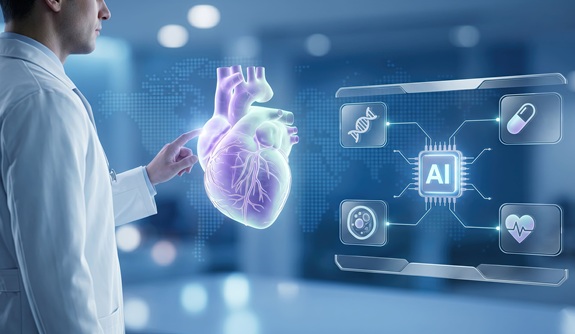
The team trained AI models using 5,300 EKG readings from 2,357 adult heart transplant recipients. One model used EKG data alone, while another combined EKG readings with the two blood test results. Biopsy records paired with EKG readings from the same patients were used to assess prediction accuracy.
For the combined model, researchers used data from heart transplant recipients treated between 2018 and 2024. Each EKG was matched to a biopsy performed within the previous month. Rejection findings were grouped as no or mild rejection versus moderate or severe rejection, reflecting the fact that treatment changes, such as adjustments to immune-suppressing medications, are typically made for more serious cases.
In a separate test group of 38 male and female heart transplant recipients, the combined model performed better than blood testing alone. It correctly identified 94% of patients who were not experiencing rejection. Compared with blood testing alone, which incorrectly flagged 19 patients as potentially needing a biopsy, the combined model would have spared those patients from the procedure.
The study was published online on September 25 in JHLT Open. The researchers stated that it is the first study to combine these blood biomarkers with EKG readings in a single AI-enabled model and directly compare the analysis with biopsy results. The team plans to test the model in more patients at several transplant centers.
“Our results highlight that electrocardiograms contain an abundance of physiological information that can be used to substantially improve the accuracy of detection and enable earlier diagnosis and treatment for patients with cardiac transplant rejection,” said Lior Jankelson, M.D., Ph.D., associate professor in the Leon H. Charney Division of Cardiology in NYU Grossman School of Medicine’s Department of Medicine and associate professor of biomedical engineering at NYU Tandon School of Engineering.
“Heart transplantation is a major, resource-intensive procedure, and rejection is common but treatable if caught in time. Based on our findings, combining the availability of EKGs with the support of AI may help identify rejection earlier and save more lives,” added Jankelson.
Related Links
NYU Langone Health