Global Survey Underscores Need to Standardize Bone Biomarker Testing
Posted on 01 Oct 2026
Bone and mineral metabolism biomarkers can complement dual-energy X-ray absorptiometry (DXA) by providing information on disease activity and treatment response. For more than 20 years, standardization of nomenclature, abbreviations, and units has remained an issue for bone status indices (BSIs). Now, a new study shows substantial international variability in BSI laboratory testing practices.
The International Osteoporosis Foundation (IOF) and the International Federation of Clinical Chemistry and Laboratory Medicine (IFCC) Joint Committee on Bone Metabolism examined self-reported laboratory practices for blood-based bone status index (BSI) testing. The study, titled IOF-IFCC International Survey of Global Laboratory Practices for Bone Status Indices, assessed how laboratories measure, report, and interpret biomarkers of bone and mineral metabolism. The analysis revealed variation in analytical platforms, instruments, specimen types, reporting units, reference intervals, decision thresholds, participation in external quality assessment (EQA) programs, and reimbursement practices.
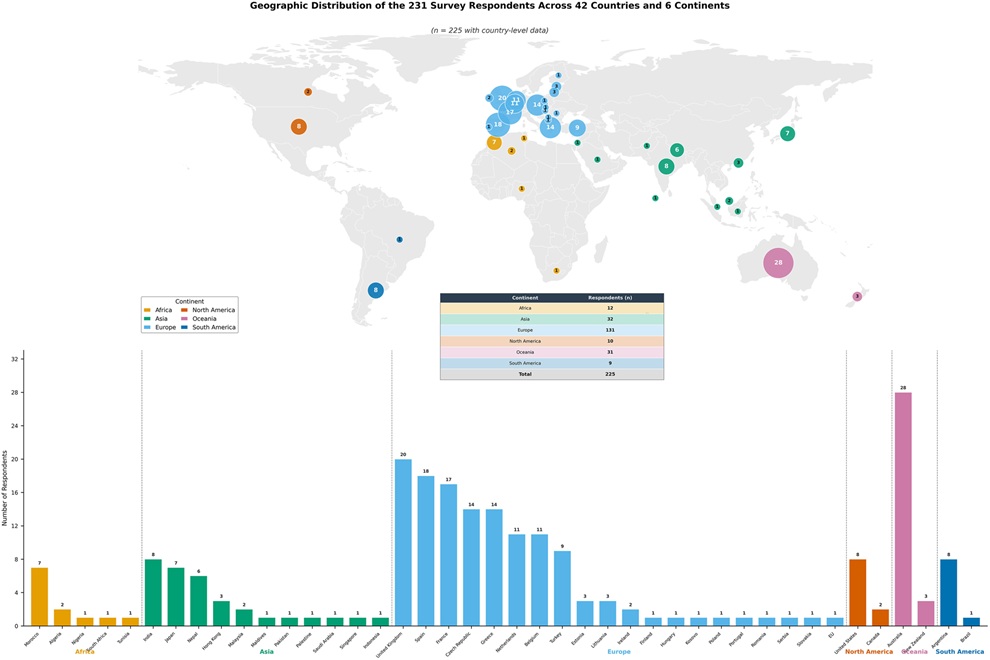
The study collected 231 responses from laboratories in 41 countries and found substantial variation in reference intervals, including among laboratories using the same manufacturer and instrument. Participation in external quality assessment appeared high for total alkaline phosphatase (ALP) and parathyroid hormone (PTH), but lower for β-isomerized C-terminal telopeptide of type I collagen (β-CTX-I) and procollagen type I N-propeptide (PINP). Adoption of β-CTX-I and PINP testing also remained incomplete, although use appeared more common in laboratories monitoring patients with osteoporosis.
The findings further showed limited access to bone-specific ALP and tartrate-resistant acid phosphatase 5b (TRAP5b). PTH testing showed poor harmonization, largely because second- and third-generation assays are used concurrently. Vitamin D decision thresholds also varied widely, and laboratories frequently reported inappropriate ordering of 1,25(OH)₂D to assess vitamin D status instead of 25(OH)D. The study was published on August 7, 2026, in Clinical Chemistry and Laboratory Medicine.
“The survey's findings reveal the extent of variation in laboratory practices that can affect BSI test results. These findings show that the lack of harmonization is not merely a laboratory issue. When the same biomarker is measured, reported or interpreted differently across laboratories, this limits the comparability of research data and can ultimately affect clinical decision-making. Greater harmonization is therefore essential if these biomarkers are to reach their full clinical potential,” said Professor Etienne Cavalier of the University of Liège in Belgium, chair representing IOF on the IOF–IFCC Joint Committee on Bone Metabolism and corresponding author.