New Oncology Assays Deliver Precise Molecular Counts with MRD-Grade Sensitivity
Posted on 29 Sep 2026
Precise molecular monitoring is central to managing hematologic malignancies, but traditional PCR workflows can limit sensitivity, multiplexing, and result clarity. Limited sample volumes and fragmented assays can also complicate longitudinal tracking and co-mutation phasing. A new set of single-molecule assays now delivers minimal residual disease (MRD)-grade sensitivity and absolute quantification in a single reaction.
Countable Labs (Palo Alto, CA, USA) has introduced the Ancora assays for oncology, built on its Countable single‑molecule PCR platform, for molecular testing in hematologic malignancy clinical applications. The assays are designed to provide absolute quantification and complete, unambiguous results by removing limitations associated with legacy PCR methods. The launch marks the company’s entry into the clinical market for oncology testing.
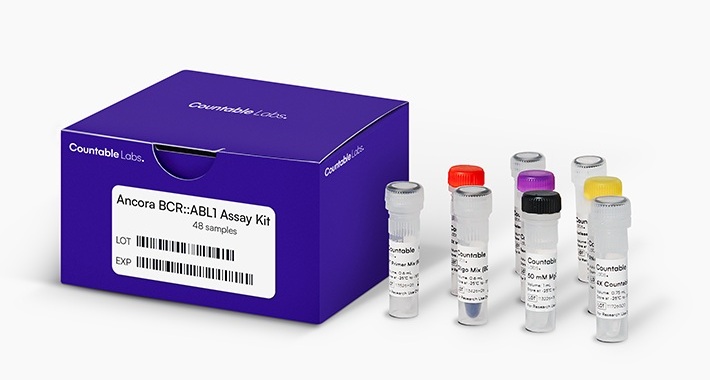
Each reaction partitions roughly 30 million single-molecule compartments, supporting a wide dynamic range without dilution or repeat runs. Direct, absolute molecule counting eliminates the need for standard curves and is intended to improve reproducibility across runs, operators, instruments, and sites. Detection uses a combinatorial color-coding system in which each call is confirmed by a distinct optical signature, allowing fusion partners to be resolved and co-mutations to be phased in a single reaction without prior knowledge of breakpoints. The workflow can deliver results in as little as three hours.
The initial portfolio includes assays for BCR::ABL1, KMT2A rearrangements covering 18 fusion transcripts and six common partners, NPM1 Types A, B, and D together with an ABL1 reference directly from RNA, and KIT D816V with simultaneous wild-type detection. Within the portfolio, the Ancora BCR::ABL1 assay is designed to detect levels as low as 0.0007% at one million ABL1 copies, beyond MR5.0, while the KIT D816V assay reaches a detection limit of 0.015% variant allele fraction (VAF). Laboratories can also combine relevant mutations and fusions into a single focused reaction, helping preserve limited sample volumes while supporting longitudinal monitoring.
The assays are available immediately through the company’s services laboratory and can also be pre-ordered, with delivery estimated by year end. The portfolio is expected to expand further, with additional assays targeting PML and BCR-ABL tyrosine kinase inhibitor resistance currently in development. For laboratories without access to a Countable PCR instrument, the company offers demo placements as well as short- and long-term rental options. The company states that its current products are intended for Research Use Only.
“Molecular laboratories and pharmaceutical companies need standardized solutions with complete detection, MRD-grade sensitivity, and fast, unambiguous results. The Ancora assays for oncology are our first set of clinical solutions built on Countable PCR technology, offering the sensitivity to detect unique features and residual disease others may miss. We plan to extend this platform across a broad range of oncology applications, including solid tumor applications and liquid biopsy,” said Giovanna Prout, Chief Executive Officer at Countable Labs.
“In our benchmarking work, the biggest difference we saw with Countable PCR was the precision. We measured coefficients of variation, which were substantially tighter than what we see with conventional FDA-approved RT-PCR. When you're tracking a patient's molecular response over time, that kind of reproducibility matters,” said Pamela Ward, Ph.D., Associate Professor of Clinical Pathology at the University of Southern California.
Related Links
Countable Labs