Liquid Biopsy Shows Promise for Detecting and Monitoring Malignant Nerve Sheath Tumors
Posted on 23 Sep 2026
Malignant peripheral nerve sheath tumor (MPNST) is one of the most serious cancers affecting people with neurofibromatosis type 1 (NF1), yet timely recognition remains difficult. Clinicians often struggle to distinguish malignant transformation from benign plexiform neurofibromas using symptoms, imaging, and biopsy alone. Earlier, minimally invasive tools could strengthen surveillance and decision-making. New findings demonstrate progress toward a blood-based assay designed to detect and monitor MPNST.
Researchers from Washington University School of Medicine, the National Cancer Institute (NCI), and Mayo Clinic developed an integrated circulating tumor DNA (ctDNA) liquid biopsy with support from the Children’s Tumor Foundation (CTF). The approach analyzes tumor-derived DNA fragments in plasma to distinguish MPNST from benign plexiform neurofibromas and tumor-free individuals. According to CTF, the work builds on a multiyear effort launched in 2022 to develop a relatively simple, minimally invasive test for earlier detection and longitudinal assessment of MPNST in people with NF1.
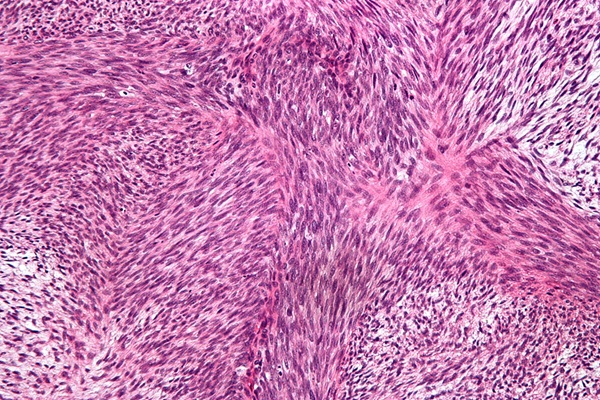
The technology moves beyond earlier copy‑number–only strategies by integrating multiple classes of genetic alterations associated with MPNST into a single assay. By capturing several tumor‑related DNA signals together, the method aims to produce a clearer molecular signature of malignancy. The study was executed under the collaborative principles of CTF’s Synodos research model, which emphasizes shared data and patient‑centered goals.
Investigators evaluated the integrated assay in 82 participants, encompassing individuals with MPNST, those with benign plexiform neurofibromas, and tumor‑free controls. The test distinguished MPNST from the other groups and outperformed the team’s prior copy‑number–based approach. In exploratory longitudinal observations, ctDNA dynamics mirrored clinical course in selected cases: in one individual, molecular evidence of recurrence was detected 80 days before clinical diagnosis, while in another, tumor DNA clearance corresponded with durable remission.
The study, titled “Integrated multiclass driver ctDNA profiling enables MPNST detection and monitoring in NF1 patients,” was published in npj Precision Oncology. While the latest results mark meaningful progress, CTF emphasizes that the assay is not ready for routine clinical use and requires further validation in larger, independent cohorts before incorporation into standard NF1 care.
Related Links
Children’s Tumor Foundation