Blood-Based DNA Analysis Method Detects Early-Stage Solid Cancers
Posted on 15 Sep 2026
Early detection of stage I solid cancers remains a significant unmet clinical need. Liquid biopsy approaches that can distinguish tumor-derived signals from background cell-free DNA are therefore drawing increasing attention in precision oncology. Building on this need, a new blood-based DNA analysis method examines protected tumor DNA fragments to support early solid cancer detection.
VolitionRx Limited (Henderson, NV, USA) presented “Early stage I solid cancer detection by direct ChIP-seq of short CTCF-protected plasma ctDNA” at the European Society for Medical Oncology Molecular Analysis for Precision Oncology (ESMO MAP) Conference in London on September 10, 2026. The presentation detailed the company’s Capture-Seq technology for detecting early stage I solid cancers.
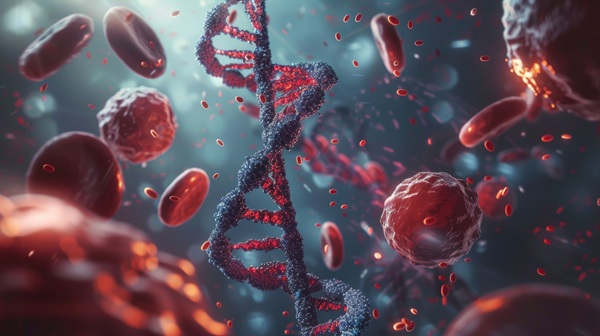
The approach, termed CTCF Capture-Seq, isolates CTCF-protected plasma ctDNA from background cell-free DNA bound to nucleosomes. Analysis of this isolated fraction generated sequencing datasets from blood samples of early-stage cancer patients that were absent in samples from healthy controls. The method is presented as a novel liquid biopsy approach that identifies a new class of sequence biomarkers.
Results from two independent cohorts were highlighted. In the first cohort, 49 of 49 cancers were detected, including 23 stage I/II cases, with no false positives reported among 21 healthy controls. A second blinded cohort detected 13 of 14 later-stage cancers, with 10 additional healthy controls and no false positives reported across the two cohorts.
Subsequent blinded validation data from 81 subjects were also reported, including 59 colorectal and lung cancer patients and 22 healthy controls. In this cohort, early-stage detection reached 95% for stage I and II cancers. The company is fast-tracking development of Capture-Seq, conducting additional studies that include competing conditions, engaging oncology key opinion leaders, and filing new patents to protect the technology.
“For patients, the potential significance is huge. If validated in larger cohorts, CTCF Capture-Seq could contribute to Multi-Cancer Early Detection (MCED) fulfilling a significant unmet clinical need,” said Dr. Andrew Retter, Medical Consultant, Volition. “We also believe that Capture-Seq has the potential to play a role in cancer management, including but not limited to, Minimal Residual Disease detection and treatment monitoring, either alone or potentially in combination with other technologies too.”