Secure Cloud-Connected qPCR System Enables Remote Infectious Disease Surveillance
Posted on 10 Sep 2026
Rapid infectious disease detection and monitoring require secure, timely access to molecular test data across distributed sites. As point-of-care quantitative PCR (qPCR) expands, remote control, biosurveillance integration, and data protection remain challenges. To meet these needs, a new system adds secure cloud connectivity and hardware-level security to portable qPCR instruments, supporting remote operation, real-time aggregation, and integration with analytics and artificial intelligence.
Anitoa Systems (Sunnyvale, CA, USA) has added comprehensive cloud connectivity and enterprise-grade security to its portable qPCR instruments. The update is designed to bring cloud capabilities to the edge of diagnostic testing, improving flexibility and data access for researchers, clinicians, and public health teams. The company positions the enhancement as a step toward more connected decentralized molecular workflows and better coordination across testing sites.
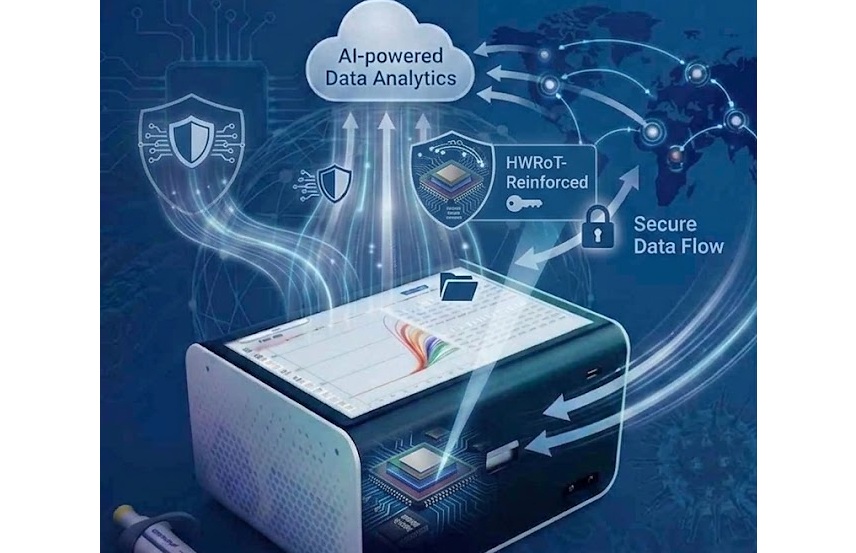
The cloud-enabled architecture allows users to remotely access instruments for data collection, experiment setup, and real-time monitoring. Devices are controlled through a secure Hypertext Transfer Protocol Secure (HTTPS) interface using a customizable, cross-platform web application. This configuration enables operators to manage diagnostic workflows from virtually any device without being tied to the instrument’s physical location.
Centralized cloud-based data storage also enables direct feeds into large-scale analytics platforms and supports artificial intelligence integration. The capability is described as particularly important for continuous biosurveillance, allowing health organizations to aggregate diagnostic data in real time across multiple locations. This could help identify emerging pathogen trends and support rapid, data-driven outbreak responses on a global scale.
Security features are embedded at the hardware level to protect sensitive diagnostic information. Each device includes a dedicated hardware security root-of-trust module within the electronics subsystem to enable hardware-level encryption. The approach is intended to make instruments tamper-resistant and physically unclonable, securing data from the point of collection through cloud transmission while protecting user information and patient privacy.
The instruments retain a portable, calibration-free design with low power consumption, enabled by Anitoa’s proprietary ultra-low-light complementary metal-oxide semiconductor (CMOS) bioimaging sensor. By pairing this optical technology with secure cloud connectivity, the system is intended to expand access to molecular testing, including in remote settings.
Related Links
Anitoa Systems