Automated System Streamlines DNA Recovery for MRD-Sensitive Testing
Posted on 04 Sep 2026
Molecular laboratories are under pressure to detect extremely low levels of residual disease, yet pre-analytical recovery of cell-free and genomic DNA from large-volume blood and plasma remains a persistent constraint. Fragmented extraction, concentration, and quantification steps can add hands-on time and variability, limiting throughput as testing grows. A new automated system now addresses these constraints by integrating high-input nucleic acid recovery and concentration to support measurable residual disease (MRD)-sensitive workflows.
Invivoscribe’s PrepQuant System is now in commercial shipment in North America, marking its progression from development and validation into customer deployment following its first unveiling at the American Association for Cancer Research Annual Meeting in April 2026. The platform is assay agnostic and is designed to support downstream tests capable of detecting disease-associated signals at MRD sensitivity levels. European availability is planned for early 2027, and additional PrepQuant kits are in development to extend the platform’s capabilities.
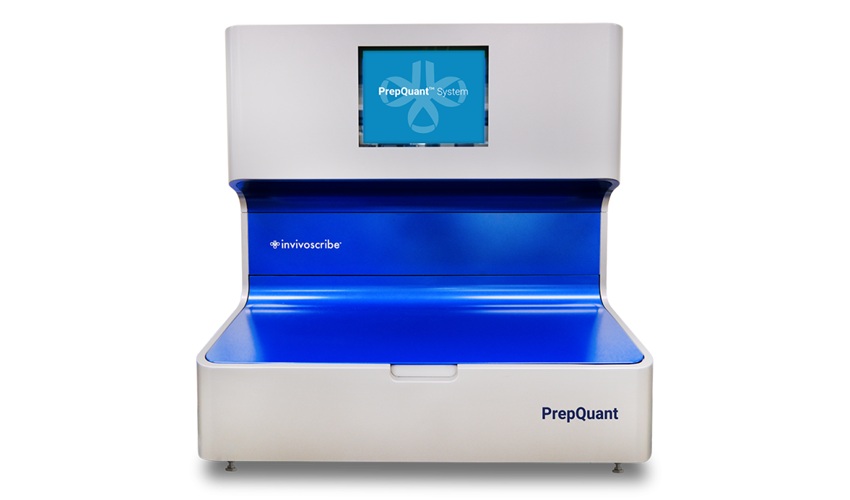
PrepQuant integrates nucleic acid extraction, concentration, and quantification into a single automated workflow intended to reduce hands-on labor, sample handling steps, variability, operating costs, and bench-space requirements. The system generates highly concentrated genomic DNA and cell-free DNA for next-generation sequencing, capillary electrophoresis, quantitative polymerase chain reaction (PCR), and digital PCR assays. It is designed and validated for blood, plasma, and bone marrow, with additional sample types under development.
The platform targets a core bottleneck in highly sensitive molecular testing: efficiently recovering, concentrating, and quantifying DNA from larger inputs while maintaining consistency. Many laboratories currently rely on separate instruments and protocols for each step, creating opportunities for error and limiting scalability. PrepQuant extends standardization upstream of analysis, complementing Invivoscribe’s MRD assays, bioinformatics, and global clinical testing services to support more consistent results across research, reference, and clinical laboratories.
“As precision oncology advances and MRD testing becomes mainstream, laboratories cannot focus on analytical sensitivity alone. The ability to generate reliable molecular data begins upstream, with how the sample is processed and how effectively the available nucleic acid is recovered and consistently quantified. PrepQuant reflects our broader view that standardization across the entire testing continuum will be increasingly important as molecular MRD testing becomes integral both to monitoring disease and evaluating the effectiveness of new therapies,” said Jeff Miller, CEO and CSO of Invivoscribe.