Multi-Omics Analysis Identifies Additional Risk Genes in Hereditary Breast and Ovarian Cancer
Posted on 18 Aug 2026
Hereditary breast and ovarian cancer can be difficult to explain genetically, leaving many high-risk families without clear answers. Although 13 established risk genes, including BRCA1 and BRCA2, are routinely screened, a definitive genetic cause is identified in only about 20% of individuals undergoing counseling. This gap complicates risk stratification and personalized prevention strategies. Researchers now show that analyzing the full set of genes alongside patterns of gene activity can uncover additional susceptibility candidates.
Researchers at Hannover Medical School (MHH), working with the University of Augsburg and Augsburg University Hospital, applied a multi-omics analysis that examines all genes and gene activity from blood samples. The analysis covers the complete set of genes and gene activity rather than only the established 13‑gene panel used in hereditary cancer testing. This comprehensive approach was used to investigate suspected hereditary breast and ovarian cancer.
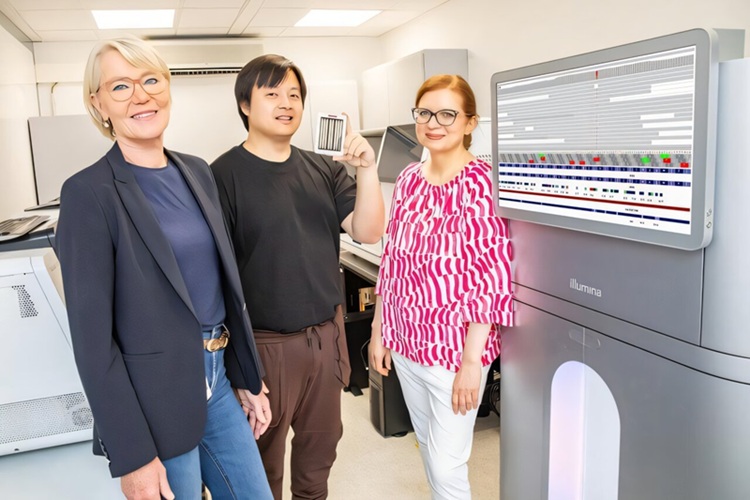
The team evaluated blood samples from 134 people with breast or ovarian cancer, or both. In every case, prior routine testing of BRCA1, BRCA2, and 11 additional risk genes had not identified a genetic cause. Using the multi-omics workflow, the investigators identified further genes and gene variants associated with an increased risk of breast cancer.
Findings highlighted additional candidates involved in DNA repair and genome stability. The study also noted that several candidates had previously been associated primarily with rare diseases in which alterations in both the maternal and paternal gene copies are typically required for disease to develop. The results suggest that alterations in just one copy of some of these genes could increase susceptibility to breast and ovarian cancer.
The results were published in npj Breast Cancer. The work involved the Institute of Human Genetics at MHH together with the Institute of Human Genetics at the University of Augsburg and Augsburg University Hospital. Centers for Familial Breast and Ovarian Cancer and partner organizations in Germany, including the center at MHH, offer support for individuals with relevant family histories or early-onset disease.
“Our findings highlight the importance of additional genes that play a key role in DNA repair and genome stability, and which are therefore new candidate genes for families with suspected hereditary breast and ovarian cancer,” said Dr. Doris Steinemann, Institute of Human Genetics, Hannover Medical School.
“As the number of genome sequencing projects increases, it will become possible to better assess the significance of rare genetic variants—including through their inclusion in genomDE, the pilot project for comprehensive diagnostics and personalized treatment planning for rare and oncological diseases,” said Dr. Monika Golas, Institute of Human Genetics, University of Augsburg and Augsburg University Hospital.
Related Links
Hannover Medical School
Augsburg University Hospital
University of Augsburg