Study Reveals Viral Protein Driving COVID-19-Related Vascular Injury
Posted on 10 Aug 2026
Lingering symptoms after acute COVID-19 infection remain a clinical challenge, with many patients experiencing fatigue, cognitive problems, and cardiovascular complications months later. The biological mechanisms driving these long-term effects are still being defined, particularly the roles of persistent immune activation and vascular dysfunction. Identifying the viral factors that disrupt these pathways could help clinicians better understand and evaluate post-COVID complications. A new study shows that a lesser-known SARS-CoV-2 nucleocapsid protein can intensify inflammatory signaling and compromise blood-vessel barriers in human cell models.
UCLA researchers focused on the SARS-CoV-2 nucleocapsid protein, a structural protein responsible for packaging viral RNA. The team examined how the nucleocapsid protein affects human macrophages, immune cells that detect pathogens and coordinate early antiviral responses. Although the protein is known to suppress early antiviral defenses, the study revealed a “double-edged” effect in which it also amplifies inflammatory pathways in macrophages that can contribute to tissue-damaging immune responses.
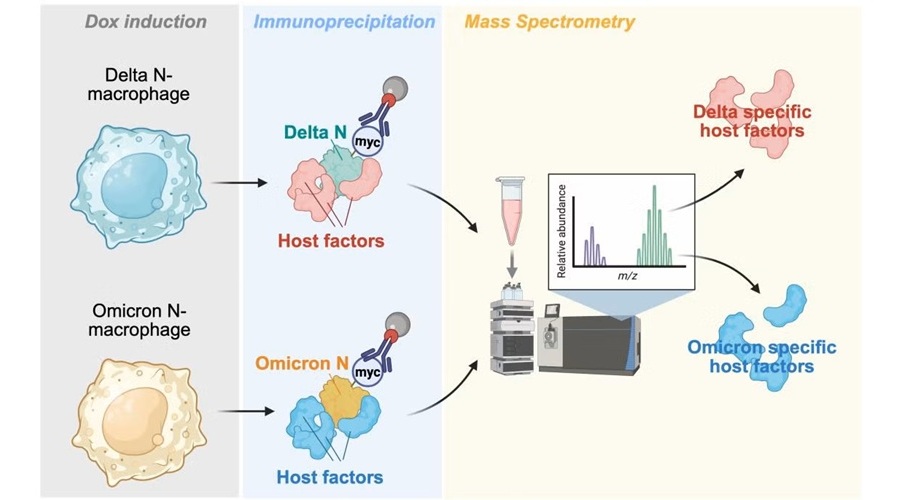
Using engineered macrophages and stem cell-based models, the investigators compared nucleocapsid proteins from multiple SARS-CoV-2 variants as well as SARS-CoV-1 and MERS-CoV. The pro-inflammatory effect was conserved across these pathogenic coronaviruses, with the Delta variant nucleocapsid triggering the strongest response. Researchers then exposed endothelial barrier models to inflammatory signals released by activated macrophages to assess their downstream effects on blood vessels.
Two human cell systems were evaluated: a stem cell-derived model of the blood-brain barrier (BBB) and a model of the coronary artery lining. When exposed to fluid containing signals from macrophages producing the Delta variant nucleocapsid, the coronary artery model showed marked barrier breakdown consistent with vascular leakage. The findings suggest a potential mechanism by which excessive immune activation during or after infection could contribute to cardiovascular injury.
Published in Science Advances on August 5, 2026, the study includes contributions from Tsinghua University and several UCLA units, including the UCLA Broad Stem Cell Research Center. The authors note that current anti-inflammatory treatments for severe COVID-19 broadly suppress immune activity, whereas the findings identify the nucleocapsid protein as a potential target for more precisely limiting hyperinflammation while preserving BBB and cardiac endothelial integrity. Because macrophages play similar roles in many infections, the researchers suggest that the underlying mechanism may also have relevance beyond COVID-19.
“Coronaviruses are notorious for encoding proteins that antagonize the body's natural antiviral defenses. When SARS‑CoV‑2 first appeared, almost nothing was known about it, so we wanted to find out whether it was using the same playbook,” said Melody Li, associate professor of microbiology, immunology and molecular genetics and member of the UCLA Broad Stem Cell Research Center.
“It’s critical to keep studying COVID‑19 so that we can constantly improve patient care — not everyone responds well to vaccines, and people who are immunocompromised often have limited treatment options. These studies can also help us prepare for future coronavirus outbreaks,” said Pablo Alvarez, co‑first author of the study and a former graduate student in Li’s lab.
Related Links
UCLA Broad Stem Cell Research Center