Circular RNAs Enable Noninvasive Cancer Detection and Risk Assessment
Posted on 03 Aug 2026
Liquid biopsy promises earlier cancer detection and agile treatment monitoring, but robust biomarkers that are stable and disease‑specific remain a hurdle. Circular RNAs (circRNAs) are structurally resilient and measurable across multiple biofluids. Their cancer‑associated expression and regulatory functions position them for diagnosis, prognosis, and treatment assessment. A new study in Chinese Medical Journal now details how circulating circRNAs can support early detection, risk stratification, and therapy monitoring.
Researchers at Shandong Cancer Hospital and Institute (Jinan, China) published a comprehensive overview describing circulating circRNAs as stable, noninvasive biomarkers and emerging therapeutic targets. CircRNAs form covalently closed loops that resist degradation, enabling reliable detection in blood, saliva, urine, platelets, cerebrospinal fluid, and gastric juice. The review notes that many circRNAs exhibit cancer‑specific expression and stage‑related changes that align with clinically relevant events such as metastasis and drug resistance.
Mechanistically, circRNAs operate through diverse modes. Beyond their well‑known function as microRNA sponges, they bind proteins, influence alternative splicing, modulate epigenetic marks, and in some cases encode short peptides. These activities allow circRNAs to act as oncogenes or tumor suppressors across hallmarks of cancer, including sustained proliferation, metabolic reprogramming, immune evasion, and therapy resistance.
For diagnostics, circulating circRNAs are highlighted as particularly attractive for early disease because of their durability in peripheral blood and other readily obtained fluids. The study points to diagnostic panels combining multiple circRNAs that can achieve high accuracy, including in early‑stage settings. Beyond detection, specific circRNAs are linked to poor prognosis in several tumor types, and longitudinal shifts in circulating circRNA levels can mirror treatment response or herald emerging resistance, supporting their utility in therapy monitoring and as actionable targets.
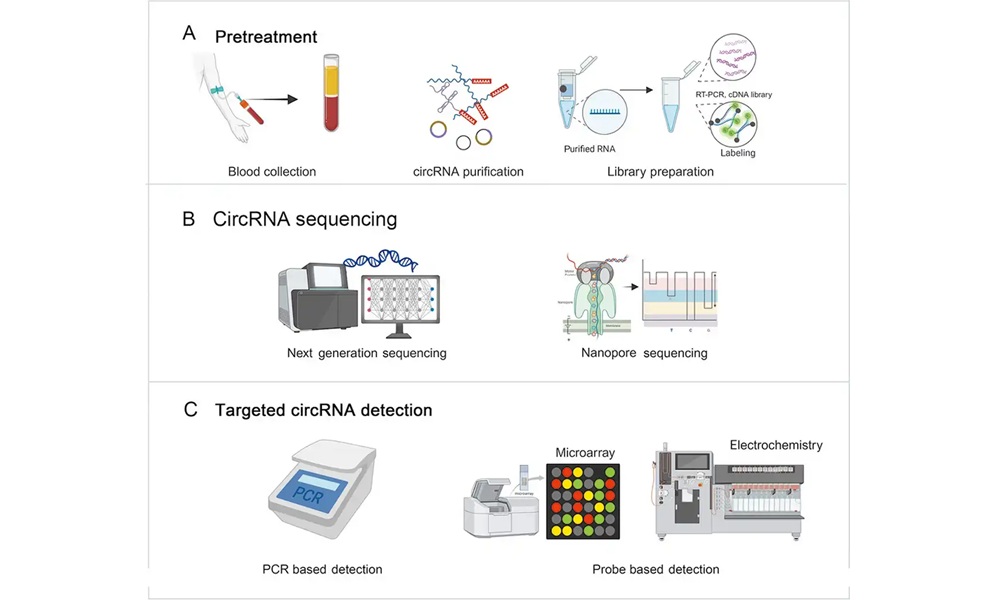
The authors also outline key implementation challenges and enabling technologies. Priorities include standardized operating procedures, large prospective validation cohorts, and improved detection workflows. Advances such as nanopore sequencing, droplet digital PCR, and CRISPR‑based assays are expected to enhance analytical performance. The review envisions a “circRNA‑centric oncology” in which endogenous circRNAs provide real‑time views of tumor evolution while synthetic circRNAs function as programmable therapeutics.
“CircRNAs are not only stable and abundant in circulation, but they also exhibit high cell‑type and tissue specificity. Their expression levels change with tumor stage and correlate with key clinical features such as metastasis and drug resistance. This makes them ideal translational tools for non‑invasive cancer management,” said Dr. Xingguo Song, corresponding author from Shandong Cancer Hospital and Institute (China).
“The strategic value of circulating circRNAs lies in their dual role as both biomarkers and therapeutic targets. They provide real‑time insights into tumor biology while offering opportunities to disrupt oncogenic pathways and reverse therapy resistance. With continued research, we are moving toward a circRNA‑centric era in cancer care,” added Song.
Related Links
Shandong Cancer Hospital and Institute





 Assay.jpg)