Blood Test Guides Patient Selection for Radiopharmaceutical Therapy in Prostate Cancer
Posted on 21 Jul 2026
Radium-223 dichloride is a bone-targeted radiopharmaceutical therapy that improves overall survival and quality of life for many patients with metastatic castration-resistant prostate cancer (mCRPC), but responses vary and no reliable biomarker currently exists to predict or monitor benefit. A minimally invasive blood-based test could refine patient selection and enable repeat assessments during therapy, providing real-time genomic insights to guide care. New findings demonstrate that a DNA blood test can identify patients most likely to benefit from radium-223 and monitor response over time.
Kyushu University and collaborating Japanese centers evaluated circulating tumor DNA (ctDNA) testing to guide and monitor radium‑223 radiopharmaceutical therapy in mCRPC. The approach profiles tumor‑derived DNA fragments in blood, allowing repeated, minimally invasive assessment of tumor genomics and heterogeneity during therapy. Investigators aimed to define the genomic landscape associated with treatment outcomes and to assess clinical utility for patient selection and monitoring.
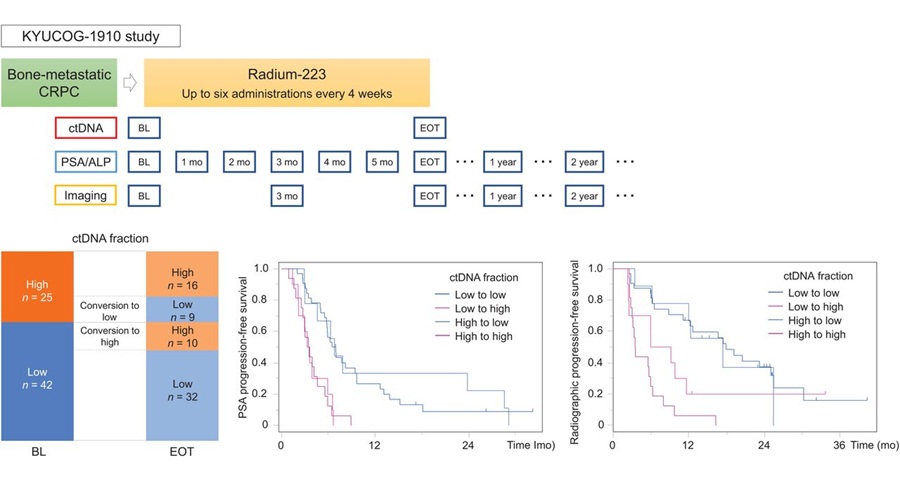
In the KYUCOG‑1901 Study, 93 patients with mCRPC underwent targeted ctDNA testing using an 88‑gene panel before and after receiving radium‑223. Associations between ctDNA features and clinical outcomes—including biomarker response, radiographic progression‑free survival, and overall survival—were analyzed. The study was published in the July issue of The Journal of Nuclear Medicine.
Patients with a higher fraction of tumor DNA in blood at baseline, or with specific gene alterations such as TP53, PTEN, and cell cycle pathway changes, had worse outcomes. Longitudinal changes in ctDNA during treatment mirrored therapeutic response and overall disease trajectory, indicating value for real‑time monitoring. According to the authors, incorporating DNA profiling into clinical practice has the potential to refine patient selection, enable early detection of treatment resistance, and optimize personalized management for prostate cancer patients.
Researchers contributing to the work were from Kyushu University, Kyoto University, Kagoshima University, Kumamoto University, Kurume University, Sapporo Medical University, Kindai University, University of Miyazaki, University of Occupational and Environmental Health, Nagasaki University, Yokohama City University Medical Center, Nagoya University, and Ehime University Hospital.
“Circulating tumor DNA (ctDNA) testing—a simple blood test—has emerged as a promising approach to advance precision oncology,” said Masaki Shiota, MD, PhD, associate professor in the Department of Urology in the Graduate School of Medical Sciences at Kyushu University in Fukuoka, Japan. “Compared to tumor biopsies, ctDNA can be collected less invasively and repeatedly, providing a real-time genomic snapshot of the tumor and its heterogeneity that could provide valuable information in the context of 223Ra therapy.”
“While 223Ra is an important treatment for prostate cancer that has spread to the bones, not all patients benefit equally. Our findings suggest that a blood-based genomic test may help identify patients who are more likely or less likely to benefit from the therapy. This could help doctors choose treatment more carefully and monitor patients more closely, with the goal of providing more personalized care,” added Shiota.