Global Genetic Map Identifies Regional Parkinson’s Variants to Support Diagnostics
Posted on 20 Jul 2026
Parkinson’s disease is the second most common neurodegenerative disorder and one of the fastest-growing neurological conditions worldwide. However, genetic studies have relied largely on people of European ancestry, limiting the reach of diagnostics and precision medicine. Because key risk genes, including GBA1 and LRRK2, can vary by population, assays that target only European variants may miss important regional differences. A new study shows substantial variation in Parkinson’s disease gene variants across 11 world regions.
University of Lübeck researchers, working within the Global Parkinson’s Genetics Program (GP2), generated a global Parkinson’s gene map through an observational genetic study of causal and risk variants. The analysis incorporated genetic data from nearly 100,000 individuals across 11 world regions, with nearly one-third from historically underrepresented populations in Africa, Latin America, and Asia. GP2’s international consortium structure enabled inclusion of numerous cohorts to expand the breadth and depth of genetic analyses.
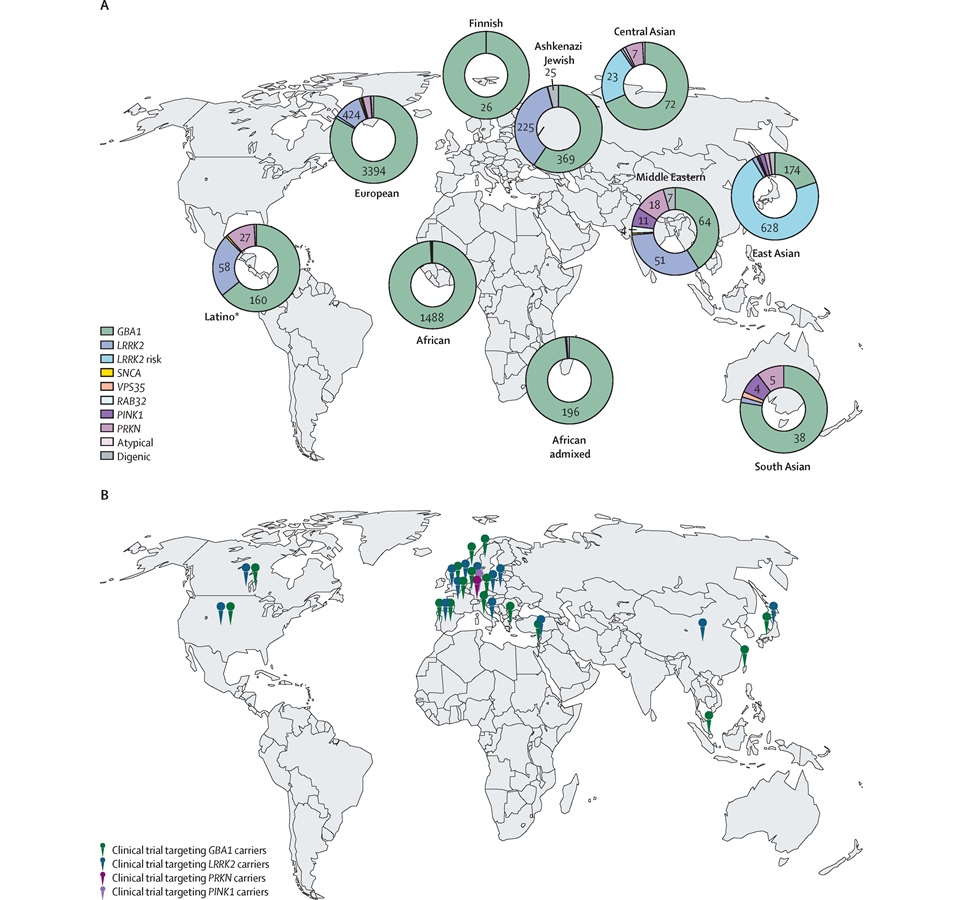
Two genes were central to the investigation: GBA1 and LRRK2, which are already targets of new drugs. Both encode enzymes involved in intracellular “waste disposal” in neurons; when these pathways are impaired, harmful protein deposits can build up and contribute to Parkinson’s disease. While the genes are relevant worldwide, the study found that the specific variants present differ substantially by region.
The authors state that the findings have immediate consequences for genetic diagnostics and trial design. If diagnostic workflows are calibrated only to variants identified in Europe, disease-causing changes in people of other ancestries may be missed. As a downstream effect, these patients are also less likely to be identified for genetically targeted therapies, which have thus far been tested predominantly in Europe and North America.
The work is part of GP2, a global effort to aggregate Parkinson’s genetics for diagnostics and precision medicine. The study, titled “Parkinson's disease genetics across diverse ancestries: an observational genetic study of causal and risk variants with translational implications,” was published in The Lancet Neurology.
“Our study is an important first step toward truly global precision medicine for Parkinson's. Before we can make genetically targeted therapies available worldwide, we need to understand which genetic causes play a role in different population groups and where patients who may be suitable for future genetically stratified clinical trials can be found,” added Dr. Lara M. Lange.
Related Links
University of Lübeck
GP2