Blood-Based Biomarker Panel Outperforms Existing Liver Disease Tests
Posted on 18 Jul 2026
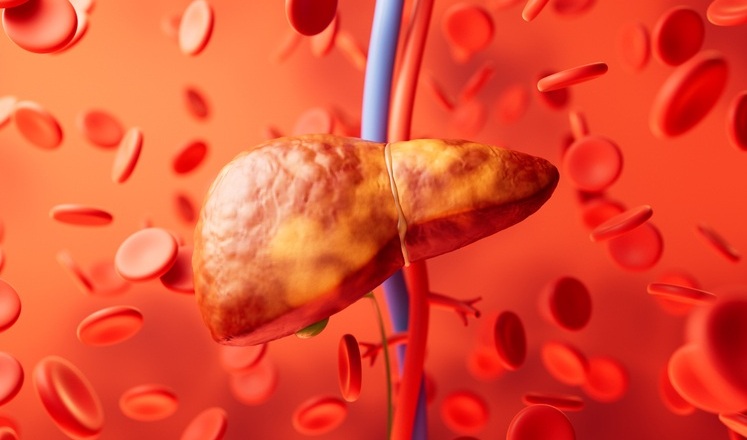
Metabolic dysfunction-associated steatotic liver disease (MASLD) is a leading cause of chronic liver dysfunction, affecting about one in three adults. Diagnosis often occurs late and still relies in part on invasive liver biopsy, which can vary between observers and may obscure the disease’s continuous biology. Existing noninvasive tests also struggle to capture molecular progression. Researchers now introduce a data-driven molecular map and blood-based biomarkers that align patients along the MASLD disease continuum.
At EMBL’s European Bioinformatics Institute (EMBL-EBI), working with Open Targets and the University of Cambridge, investigators identified a set of plasma proteins linked to MASLD that can be used to diagnose and monitor patients. The team integrated multimodal patient data to reconstruct a molecular disease trajectory, providing a population-level view of how gene expression changes as MASLD progresses. The study was published in Nature Metabolism on July 15, 2026.
The methodology anchors changes in gene expression to the histological features that define MASLD severity across patients. By identifying gene groups strongly associated with these common histological changes, the researchers built a MASLD-related regulatory network that captures signaling pathway activity and cellular response patterns. They also applied a histology-based patient ranking to stratify individuals into sequential, overlapping groups, reflecting the disease’s continuous trajectory rather than discrete stages.
Using paired liver–plasma datasets, the team identified 57 genes shared between their MASLD cohort and the plasma reference, establishing a blood-measurable biomarker panel that can position patients along the disease trajectory. This panel outperformed existing noninvasive diagnostic tests and, with further validation, could complement and refine current assessments or potentially replace them.
Where repeated biopsies were available, the framework’s inferred molecular shifts tracked longitudinal samples over time, despite variability introduced by sex and comorbid conditions. The authors note that further research is needed to determine whether the identified genes are causal drivers or consequences of disease processes, but the trajectory offers a starting point for deciphering mechanisms with implications for diagnosis and treatment.
“Describing MASLD as a series of distinct disease stages oversimplifies a highly dynamic disease. By reframing MASLD as a continuous process, we were able to capture how the underlying biology evolves over time. We hope our framework will help drive a conceptual shift in how MASLD is studied and understood,” said Ioannis Kamzolas, postdoctoral research associate at the University of Cambridge and joint first author.
“I was so surprised to see that biomarkers we identified based solely on the data were better at predicting patients' disease stage than the state-of-the-art tests in the clinic. It's also a strong argument to consider this approach for similar diseases, where it is hard to get repeated samples from patients,” said Evangelia Petsalaki, previously group leader at EMBL-EBI and the Open Targets project lead.
Related Links
EMBL-EBI