Blood Test Improves Alzheimer’s Diagnosis and Management Across Care Settings
Posted on 14 Jul 2026
Early and accurate identification of Alzheimer’s disease remains challenging in routine care, particularly outside memory clinics. Confirmation often depends on positron emission tomography (PET) imaging or cerebrospinal fluid analysis, which can be expensive and difficult to access. These barriers can leave patients and clinicians facing delays and diagnostic uncertainty. New findings show that a blood-based biomarker test can deliver specialist-level diagnostic accuracy in everyday care settings.
At the Alzheimer’s Association International Conference (AAIC) 2026 in London and online, investigators presented interim real-world data from Sweden on the PrecivityAD2 blood test, developed by C2N Diagnostics. The assay analyzes amyloid beta and phosphorylated tau, abnormal brain proteins associated with Alzheimer’s disease, to support clinical diagnosis. In one of the first evaluations of its kind, the study included more than 1,300 patients and 165 physicians across primary and specialty care settings.
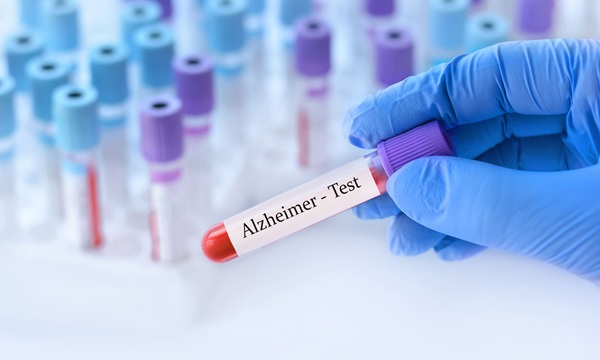
The cohort included 1,310 individuals with mild cognitive impairment (MCI) or dementia, with 927 assessed by specialists and 383 in primary care. Primary care patients were also independently evaluated by dementia specialists, enabling head‑to‑head comparisons. Clinicians recorded working diagnoses and management plans before and after receiving PrecivityAD2 results.
Access to blood test results significantly improved diagnostic performance across care settings. In primary care, accuracy rose from 65% to 93%, while among specialists it increased from 74% to 89%. In the head-to-head subset, specialists achieved 94% diagnostic accuracy, which was nearly matched by primary care physicians. Blood test results also changed diagnoses for 30% of primary care patients and 21.6% of specialist-managed patients.
After a negative result, primary care clinicians’ willingness to rule out Alzheimer’s disease increased from 12.9% to 25%. Positive results also led specialists to make immediate diagnoses without additional testing far more often, rising from 1.9% to 55.4%. Overall, clinical management was revised in about half of cases across both settings.
According to the organizers, knowledge of blood test results could expand access to accurate diagnoses in frontline care. To support appropriate adoption, the Alzheimer’s Association is preparing a concise decision‑making tool for its ALZPro professional hub and has published Clinical Practice Guidelines with brand‑agnostic recommendations for blood‑based biomarker testing.
“We wanted to find out whether a simple blood test for Alzheimer’s changes how doctors actually diagnose and manage their patients in everyday clinical care. Accurate Alzheimer’s diagnosis has largely been limited to specialist settings. Our findings show that this blood test could bring that level of accuracy into primary care, where most patients are first seen, closing the gap between primary care and specialty care,” said Sebastian Palmqvist, M.D., Ph.D., lead author of the study, neurologist and associate professor of neurology at Lund University, Sweden.
“Because not all blood-based biomarker tests meet the same standards for accuracy, clear evidence-based guidance is essential. These tools help clinicians make informed decisions about using the right blood-based biomarker test for the right patient at the right time,” said Sheena Aurora, M.D., Alzheimer’s Association vice president of medical affairs.
Related Links
C2N Diagnostics
Alzheimer’s Association