Bacterial Growth Assay Predicts COVID-19 Severity From Plasma
Posted on 14 Jul 2026
COVID-19 presents with a wide clinical spectrum, from mild illness to severe, life-threatening disease. Early differentiation between patients likely to remain mild and those at risk of severe progression is vital for care pathways. Biological samples contain multiplexed chemical signals that may encode this prognostic information. New findings demonstrate that growth responses of Escherichia coli to patient plasma can distinguish mild from severe COVID-19.
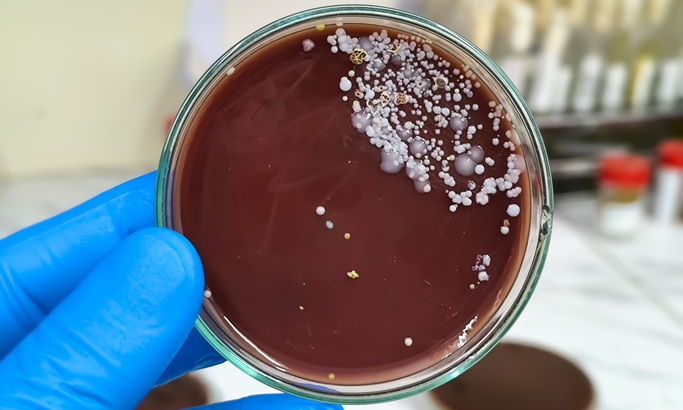
INRAE, in collaboration with Grenoble Alpes University Hospital, Université Grenoble Alpes, and the CEA, describes an approach that uses Escherichia coli (E. coli) as a living bacterial reservoir computer. Without genetic modification, the bacterium is placed in direct contact with plasma from patients with COVID-19. It adapts its metabolism and growth to the plasma’s chemical composition, generating a growth curve that reflects the detected signals.
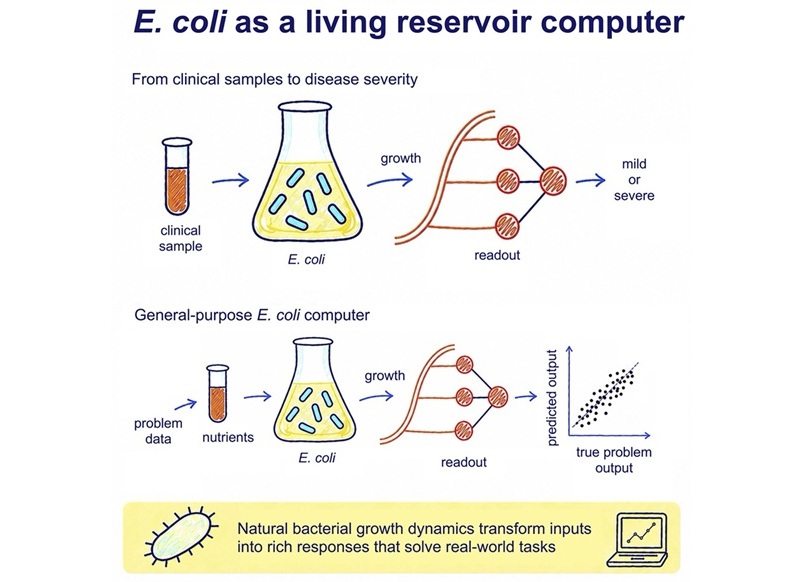
The resulting growth curve is measured and treated as an information-processing output. In clinical samples, this readout was used to classify whether a patient was likely to develop mild or severe COVID-19. For additional computational tasks, researchers translated problems into defined nutrient mixtures that elicited analogous growth-based responses. Notably, the bacterium performed tasks typically assigned to machine-learning algorithms without prior training.
The research was published in Cell Systems and coordinated by INRAE, with participation from Grenoble Alpes University Hospital, Université Grenoble Alpes, and the CEA. The authors indicate that genetically unmodified living organisms can convert the complexity of a sample into usable information. This approach could lead to simple, affordable diagnostic and prognostic tools that can be deployed in settings with limited technical resources.
The team plans to explore additional applications, including monitoring environmental samples such as urban wastewater and analyzing other types of clinical specimens. More broadly, the work highlights the potential of living systems as platforms for information processing and sensing.
Related Links
INRAE
Grenoble Alpes University Hospital