Noninvasive Biomarkers Advance Colorectal Cancer Risk Assessment
Posted on 08 Jul 2026
Colorectal cancer is a leading cause of cancer morbidity and mortality, yet screening uptake and diagnostic pathways remain limited by invasiveness and patient adherence. Colonoscopy requires bowel preparation and sedation, while fecal tests can be underused, reducing early detection. Less invasive molecular approaches could address these barriers and support treatment monitoring. New findings show that emerging liquid biomarkers may improve early detection and risk assessment in colorectal cancer.
Researchers at the University of Sharjah (Sharjah, UAE) present a narrative review, published in Clinica Chimica Acta, describing noninvasive liquid biomarkers for colorectal cancer. The analysis focuses on circulating tumor DNA (ctDNA) and microRNAs (miRNAs) within a broader multi-omics framework that also includes genomic, epigenomic, metabolomic, proteomic, and gut microbiome markers. Together, these approaches are intended to complement conventional diagnostic methods while reducing reliance on procedures that require surgical intervention or tissue biopsy.
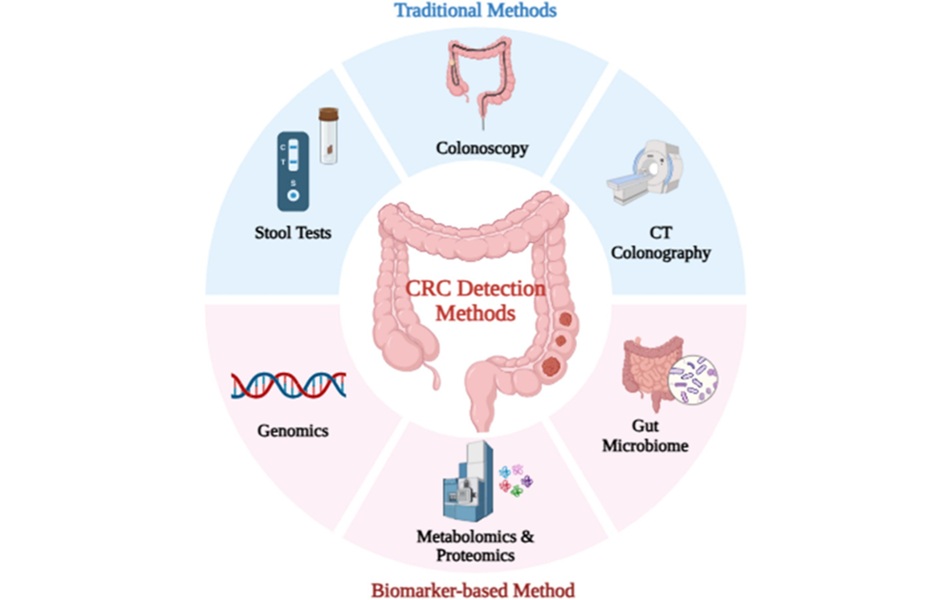
To provide comprehensive and balanced coverage of emerging biomarkers for early detection and diagnosis, the authors conducted a structured literature search. Electronic databases, including PubMed/NCBI, Scopus, and Web of Science, were systematically queried for studies published between 2010 and 2025 using keyword combinations such as “colorectal cancer,” “early detection,” “biomarkers,” “ctDNA,” “miRNA,” “epigenetics,” “microbiome,” “proteomics,” and “metabolomics.” Priority was given to original research and high-quality review articles, while overlapping findings were critically assessed to minimize redundancy and strengthen interpretation.
According to the authors’ synthesis, liquid biomarker strategies detected in minimally invasive samples, such as blood or stool, may enable earlier disease identification, improve diagnostic accuracy, and support personalized screening. The review highlights potential gains in screening compliance, earlier intervention, and reduced morbidity and mortality if such biomarkers are integrated into screening programs. While emphasizing that colonoscopy and fecal-based tests remain important, the authors underscore the promise of noninvasive molecular diagnostics for more precise and accessible pathways of care.
The article also frames a translational pathway from biomarker discovery to routine diagnostic practice. It notes the global burden of colorectal cancer, citing approximately 1.9 million new cases and 904,000 deaths in 2022, and contrasts survival exceeding 90% for localized disease with rates below 15% after metastatic spread. Within this context, the authors propose that sustained advances across scientific and medical communities will keep biomarker research central to reducing the disease’s worldwide impact.
Related Links
University of Sharjah