New AI Test Delivers Rapid Breast Cancer Recurrence Predictions
Posted on 09 Jul 2026
Recurrent breast cancer remains a persistent driver of morbidity and retreatment, and current risk stratification often depends on genomic assays that are costly and slow. Waiting weeks for results can delay adjuvant therapy decisions and consume precious tissue. Accurate and faster prognostication across subtypes that lack reliable genomic tools is an unmet need. To help address this challenge, researchers have now developed an artificial intelligence test that estimates recurrence risk using routinely available materials.
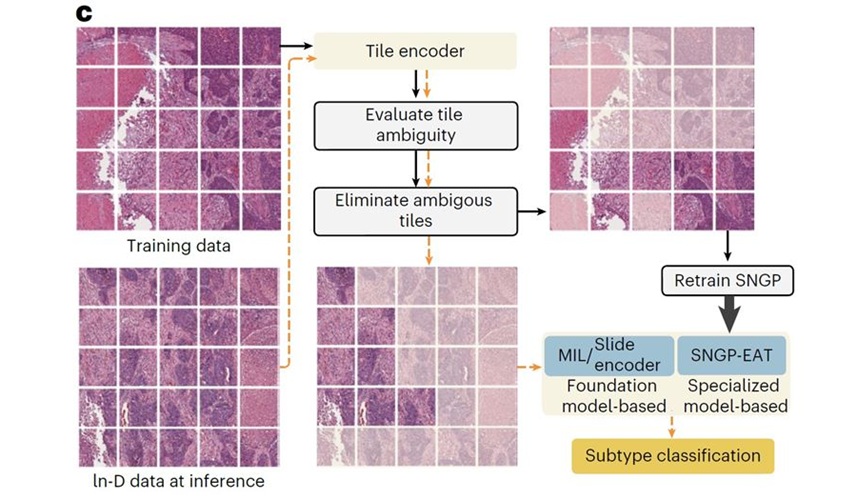
Researchers at New York University developed the multimodal artificial intelligence test to analyze digital pathology slides that pathologists already review and combine them with routine clinical information, including tumor stage, patient age, and hormone receptor status. The approach is designed to generate risk estimates without requiring genomic testing workflows.
Development and evaluation drew on data from 15 patient populations across seven countries. The researchers assessed performance using standard statistical measures, including the C-index and hazard ratio, to determine how well the model distinguished between patients at different levels of risk. They report that the test reliably separated higher-risk from lower-risk patients.
The test also performed well in estimating the probability of recurrence in triple-negative and HER2-positive breast cancers, two subtypes that currently have no reliable genomic test. The team notes that further evaluation in completed randomized clinical trials is needed to build confidence in using the tool to guide treatment. The findings were published in Nature Communications.
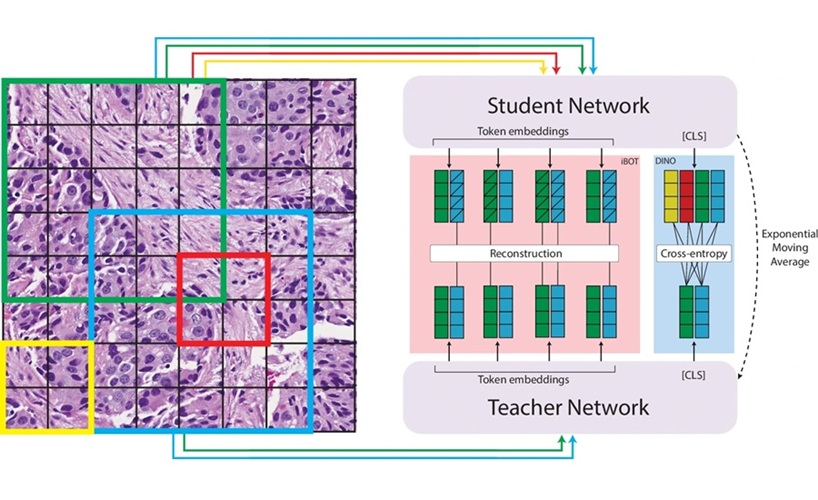
“The model’s accuracy doesn’t come from hand-labeled data alone. It comes from self-supervised pretraining that lets it learn rich representations first, which then translate into strong downstream performance—a recipe that should generalize far beyond breast cancer and, more broadly, is the kind of new AI science these hard problems demand,” said Yann LeCun, Jacob T. Schwartz Chaired Professor of Computer Science and Data Science at New York University and one of the paper’s authors.
“In testing on thousands of patients, our AI test matched or outperformed a widely used genomic test. Because it relies on existing slides, it could deliver answers in hours instead of weeks, at lower cost, while sparing tissue for future testing,” said Krzysztof J. Geras, a visiting scholar at NYU’s Center for Data Science and an adjunct assistant professor at NYU Grossman School of Medicine, who led the work.
Related Links
New York University