Spatial Map Guides Treatment Selection in Muscle-Invasive Bladder Cancer
Posted on 20 Jun 2026
Muscle-invasive bladder cancer is clinically heterogeneous, with patients often responding very differently to therapy. Existing biomarkers do not fully explain these disparities, limiting precision treatment planning and response assessment. By mapping how tumor cell states and immune environments are organized within individual tumors, researchers may be able to identify key therapeutic vulnerabilities. A new study shows that spatially resolved profiling can distinguish luminal and basal-like tumor regions with distinct biology and treatment sensitivity.
At The University of Texas MD Anderson Cancer Center (Houston, TX, USA), investigators created a spatial map of muscle-invasive bladder cancer by integrating spatial transcriptomics from 22 pretreatment tumors with matched whole-exome sequencing (WES) and bulk RNA sequencing (RNA-seq). Single-cell RNA sequencing and single-cell spatial transcriptomics from additional tumors were used to validate observations at higher resolution. The work, published in Cancer Discovery, organizes tumor cell states, immune milieus, and lineage-linked vulnerabilities within discrete intratumoral regions. The framework describes how multiple tumor programs coexist and interact rather than a single dominant molecular subtype.
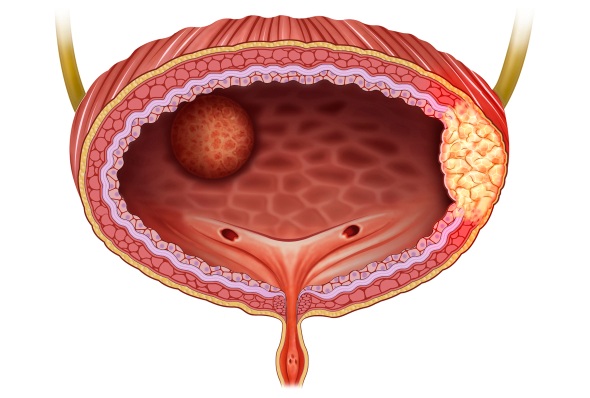
The analyses revealed a continuous differentiation axis from luminal to basal states within individual tumors. Luminal-like cells were concentrated in tumor cores and enriched for FGFR3 and NECTIN4, while basal-like cells clustered near invasive margins and showed higher EGFR signaling, EMT, chromosomal instability, and immune infiltration. These distinct compartments were associated with different therapeutic vulnerabilities: luminal regions supported NECTIN4 as a target, whereas basal-like regions were linked to immune-rich microenvironments and greater chemotherapy sensitivity.
Preclinical testing showed that NECTIN4 overexpression increased in vitro sensitivity to enfortumab vedotin, a NECTIN4-directed antibody-drug conjugate, while shifting cells toward a more luminal-like state. Chemotherapy and enfortumab vedotin appeared to work through different mechanisms, suggesting that spatial tumor information could help guide rational sequencing or combination strategies tailored to specific tumor compartments.
FGFR3 and EGFR marked opposite ends of the luminal–basal spectrum, a pattern validated across more than 3,000 tumors from independent cohorts. The study notes that larger prospective clinical cohorts, including post-treatment samples, are needed to evaluate how therapies reshape tumor architecture over time.
“Traditional molecular subtyping often classifies bladder cancers as either luminal or basal, but our spatial analyses show that this binary view is incomplete. Within a single patient’s tumor, luminal and basal-like programs can coexist in highly organized spatial patterns, and those patterns are closely tied to immune activity, lineage-specific treatment vulnerabilities, and how different tumor regions may respond to treatment,” said Linghua Wang, M.D., Ph.D., professor of Genomic Medicine at The University of Texas MD Anderson Cancer Center.
“An important message from this work is that effective treatment may need to account for both luminal and basal components within the same tumor, as well as their spatial organization. Rather than treating bladder cancer as a single uniform disease state, spatial information may help guide rational combinations or sequencing of therapies that target distinct tumor regions and cell states,” stated Jianjun Gao, M.D., Ph.D., professor of Genitourinary Medical Oncology at The University of Texas MD Anderson Cancer Center.
Related Links
UT MD Anderson Cancer Center