Mass Spectrometry Metabolomics Detects Tumor Metabolites for Cancer Monitoring
Posted on 11 Jun 2026
Cancer’s altered metabolism complicates how clinicians detect and monitor tumors, because nutrient use can shift with context and time. Measuring small-molecule metabolites that distinguish malignant from normal tissues could sharpen disease tracking and support therapeutic decisions. Clinical laboratories need approaches that capture this metabolic flux directly in patients. Researchers now outline mass spectrometry–based metabolomics and isotope tracer strategies that reveal tumor fuel use and suggest new measurement targets.
Researchers at Washington University in St. Louis and Siteman Cancer Center are focusing on cancer metabolomics, the systematic profiling of small molecules that cancer cells consume or produce to support growth. The program aims to distinguish tumor-derived metabolites that could help identify disease presence and behavior. Investigators frame this as a complementary monitoring approach that exploits cancer cells’ distinct metabolic programs.
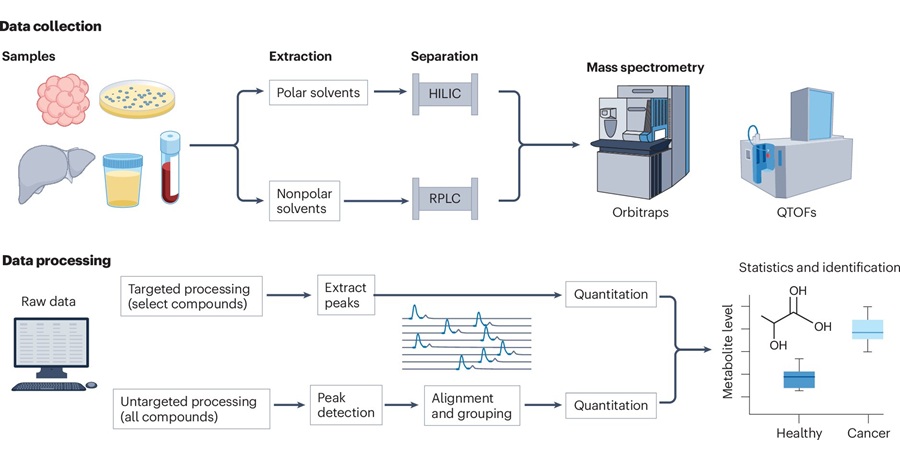
The team centers its work on mass spectrometry, enabling identification and quantification of specific metabolites at very low abundance. A dedicated laboratory housing more than 20 instruments is being used to map subtle metabolic changes. In ongoing patient studies, the group is administering isotopically labeled glucose to trace in vivo pathway flux and resolve how tumors acquire and use nutrients under physiological conditions.
A recent overview in Nature Reviews Cancer (2026) synthesizes current evidence and open questions in this field. Earlier research published in Nature (2024) reported that fructose can indirectly fuel tumor growth in mouse models of melanoma, breast cancer, and cervical cancer, with metabolomics data indicating a particular preference for a liver-derived fructose product. Collectively, these studies underscore the value of metabolite readouts for understanding tumor nutrient dependencies that may be invisible in cell culture alone.
The authors note several practical hurdles to translation. Tumors are heterogeneous tissues made up of malignant and nonmalignant cells, making it difficult to attribute metabolite signals to cancer alone, while appropriate “healthy” comparison samples can be hard to define. They emphasize the need for metabolomics studies in thousands of people with diverse diets, genetic backgrounds, and lifestyles to disentangle these variables and assess whether dietary strategies could support patient care.
"It is not a new idea to fight cancer with dietary modifications, but it's too complicated to design interventions based on simple studies of cancer cells alone in isolation. We are excited that metabolomics data from human patients can provide the knowledge needed to sort out the complexity," said Gary Patti, the Michael and Tana Powell Professor of Chemistry at Washington University in St. Louis and a professor of genetics and medicine at WashU Medicine.
Related Links
Siteman Cancer Center
Washington University in St. Louis