Blood-Based Method Tracks Gene Activity in the Living Brain
Posted on 04 Jun 2026
Real-time measurement of gene activity in the brain has been limited by assays requiring destructive tissue sampling. Tracking active genes could reveal how the body responds to environmental factors, medication, or disease progression, but current workflows rely on end-point analyses that miss in vivo dynamics. Researchers have now developed a blood-based approach for monitoring targeted gene transcription in living brain tissue.
Rice University (Houston, TX, USA) bioengineers have developed In-vivo Tracking of Active Transcription (INTACT), a method designed to monitor selected genes in living tissue using a standard blood draw. The approach aims to quantify transcriptional activity without removing or damaging tissue. The team describes this as a demonstration of nondestructive gene transcription measurement in the living brain.
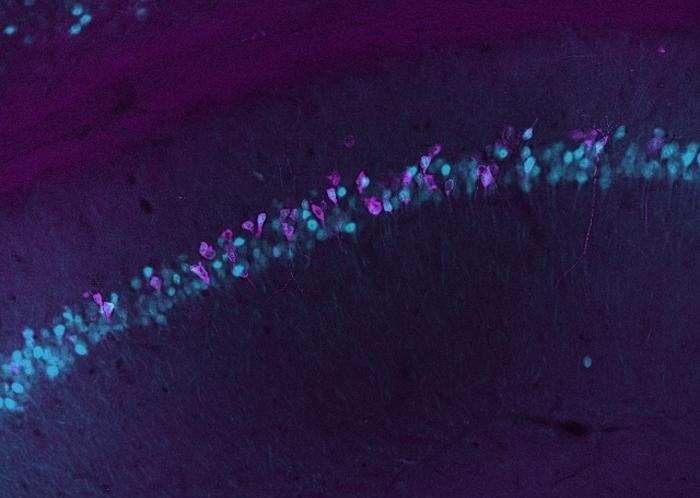
INTACT integrates engineered reporter molecules, termed Released Markers of Activity (RMAs), with intracellular sensors that recognize a target messenger RNA (mRNA). Upon detecting the target mRNA, the sensors trigger production and release of RMAs into the bloodstream. The circulating RMAs can then be measured from blood, enabling longitudinal tracking of specific gene activity. Because the targeting sequence is encoded in the genetic construct, the system is presented as programmable for different genes.
The platform was validated in an animal model and was able to track transcriptional activity from three distinct brain regions simultaneously. The authors note that, unlike next-generation sequencing (NGS) and quantitative polymerase chain reaction (qPCR), which require destruction of the analyzed sample, the new method permits repeated measurements over time in the same organism. The capability to multiplex by gene, neural circuit, or brain region is identified as an area for further development.
The study, “Monitoring in vivo transcription with synthetic serum markers,” was published in Nature Communications on May 27, 2026. The researchers also indicate potential to expand beyond the central nervous system, suggesting applicability to other tissues. They further state that the method is scalable and, in theory, adaptable to any gene sequence included in the construct.
“This is the first demonstration of measuring transcription for targeted genes nondestructively in living tissue. That means that we can actually select which gene we want to study and then see how it expresses over time within the same organism. That allows us to see what happens before, for example, a disease occurs and how gene expression changes as that disease progresses,” said Jerzy Szablowski, assistant professor of bioengineering at Rice and the corresponding author on a study.
Related Links
Rice University