Blood-Based Assay Enables Noninvasive Monitoring of Sarcoma Immunotherapy Response
Posted on 03 Jun 2026
Sarcomas remain difficult to monitor during immunotherapy, as low tumor mutation burden can limit traditional circulating tumor DNA approaches and repeat tissue biopsies are often impractical in advanced disease. To address this gap, a new blood-based assay now captures immune, stromal, and tumor signals linked to immunotherapy response and resistance in sarcoma.
Aqtual’s (Hayward, CA, USA) active chromatin cell-free DNA (cfDNA) platform is designed to evaluate immune, stromal, and tumor-associated genomic biology from a single blood-based assay. Findings were published in npj Precision Oncology and presented at the American Society of Clinical Oncology (ASCO) 2026 Annual Meeting in Chicago (May 29–June 2). The work was conducted with investigators at University Health Network’s Princess Margaret Cancer Centre.

The approach profiles active chromatin features in plasma to infer promoter activity and transcriptional programs, alongside established genomic analyses such as copy-number profiling. Plasma-derived promoter activity demonstrated strong agreement with matched tumor RNA sequencing, with a correlation of 0.81, indicating that blood-derived signals reflect underlying tissue transcriptional programs. Unlike methods focused primarily on mutations or methylation, the active chromatin readout is intended to capture tumor microenvironment biology, including immune and stromal states, in the same library preparation.
In the published study of 30 patients with advanced leiomyosarcoma receiving durvalumab-based combination therapy, baseline plasma active chromatin cfDNA signatures were associated with clinical benefit. Immune-associated programs, including B-cell and T-cell activation signatures, were associated with improved progression-free survival (hazard ratios 4.07 and 4.27; both p<0.01). Stromal remodeling signatures related to extracellular matrix organization were linked to resistance and shorter progression-free survival (hazard ratio 0.17; p<0.001), and tumor-associated genomic features, including copy number variation and a tumor fraction greater than 5% (hazard ratio 3.33; p=0.008), also correlated with outcome.
New analyses presented at ASCO (Poster #335, June 1) examined paired baseline and progression samples from the same cohort to track longitudinal changes in immune, stromal, and tumor-associated genomic features under treatment pressure. The findings provide an early view of resistance biology in blood in a setting where biopsies are often challenging. Larger, independent studies are stated to be underway.
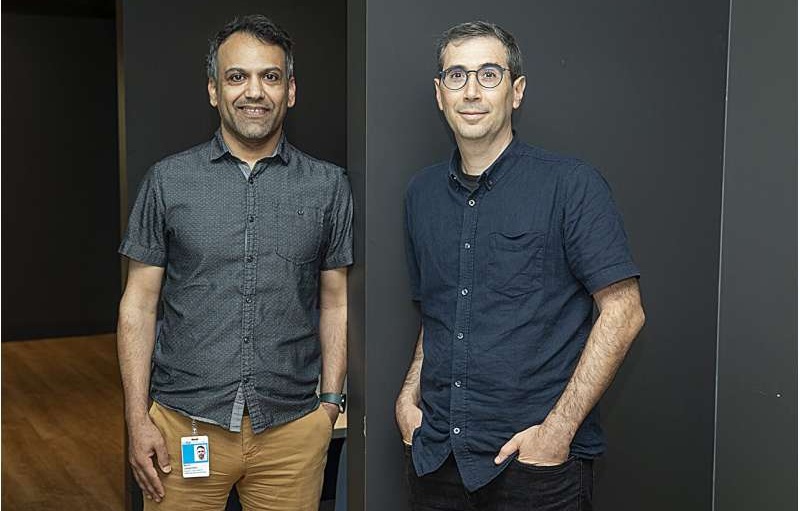
“There is an important need for predictive biomarkers that may help identify which patients with leiomyosarcoma are most likely to benefit from immunotherapy approaches. This study provides preliminary evidence that a simple blood test taken before treatment may help identify which patients could benefit from combination immunotherapy approaches,” said Albiruni Abdul Razak, MB MRCPI, Clinician Investigator, UHN’s Princess Margaret Cancer Centre.
“The significance of this work is not any single biomarker, but the architecture behind them. In a single library, our platform reads immune state, stromal state, and tumor genomics simultaneously, in a sarcoma setting where conventional ctDNA approaches often struggle and repeat tissue biopsies are rarely feasible. While these findings are highly encouraging, they were generated in a relatively small patient cohort and will need to be confirmed in larger, independent studies, which are already underway,” said Diana Abdueva, PhD, Co-Founder and Chief Executive Officer of Aqtual.
Related Links
Aqtual