Multi-Cancer Test Boosts Detection When Added to Standard Screening
Posted on 02 Jun 2026
Most cancers are still diagnosed outside organ-specific screening, often at advanced stages. In the United States, guideline-recommended screening detects only 14% of cancers, underscoring the need for complementary approaches. New prospective data show that adding a blood-based multi-cancer early detection test increased screen-detected cancers 6.5-fold, with high specificity and low rates of invasive follow-up.
GRAIL’s (Menlo Park, CA, USA) Galleri multi-cancer early detection (MCED) test was evaluated in PATHFINDER 2, a prospective, registrational, interventional study of 35,878 adults aged 50 years and older with no clinical suspicion of cancer in the U.S. and Canada. Results from the full cohort were presented in an oral session at the 2026 American Society of Clinical Oncology (ASCO) Annual Meeting on May 31, 2026. The study is described as the largest interventional MCED investigation conducted to date in North America.
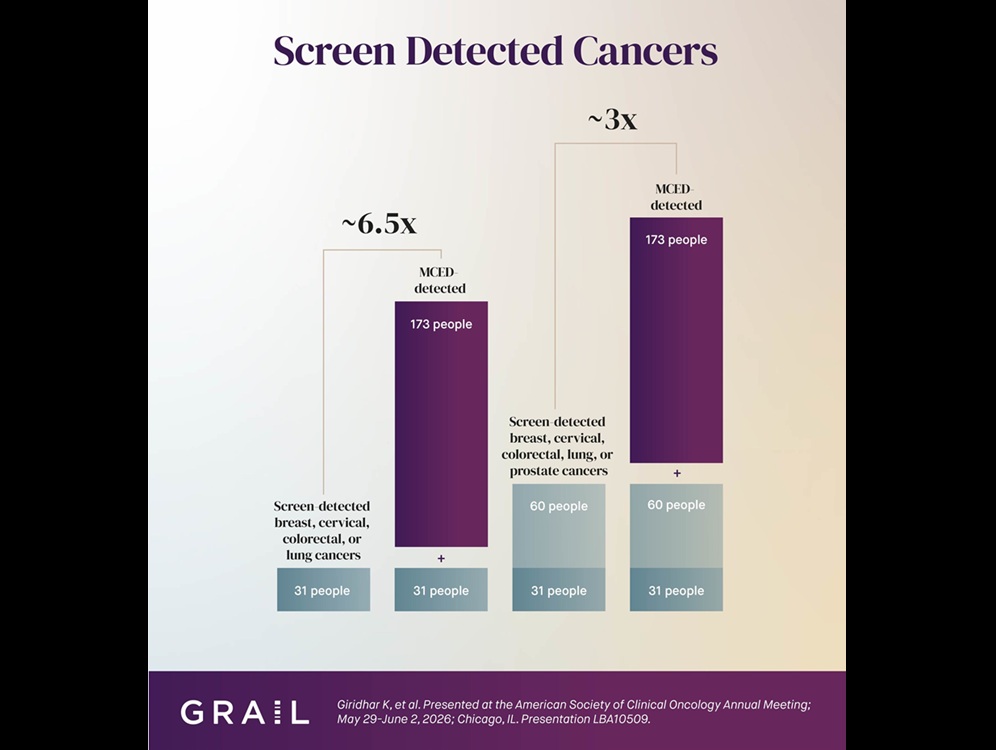
Adding Galleri to guideline-recommended screening for breast, cervical, colorectal, and lung cancers increased the number of screen‑detected cancers 6.5‑fold; when added to screening that also included prostate cancer, the increase was nearly threefold. Overall, 60% of cancers diagnosed in the cohort were detected by screening.
Among new cancers detected by Galleri, 53.0% were stage I–II and 70.9% were stage I–III; notably, 71.3% of these lacked U.S. Preventive Services Task Force A or B screening recommendations. The test showed a 60.3% positive predictive value (173 cancers among 287 positive signals), 99.6% specificity, and episode sensitivity of 69.8% for 12 cancers responsible for two‑thirds of U.S. cancer deaths (39.3% for all cancers).
Safety findings included five study‑related adverse events during diagnostic evaluation in participants with confirmed cancer; one serious adverse event related to diagnostic workup was identified after data lock, with follow‑up ongoing. Anxiety increased transiently after a positive test with subsequent cancer diagnosis and returned to baseline by 12 months.
The blood-based test is intended for use alongside standard-of-care screening and predicts Cancer Signal Origin (CSO) to guide diagnostic evaluation, which was correct 91.3% of the time in the study. Diagnostic workup reached resolution in a median of 48 days, with invasive procedures performed in 0.6% of safety-analyzable participants after a positive result; 90.5% were nonsurgical. GRAIL’s clinical laboratory is CLIA-certified and CAP-accredited. The prescription-only Galleri test was developed by GRAIL and has not been cleared or approved by the U.S. Food and Drug Administration (FDA).
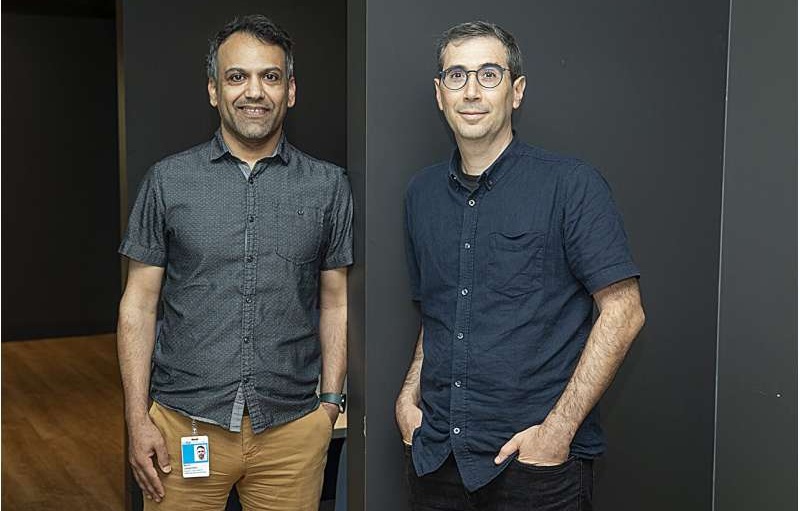
“PATHFINDER 2 provides important additional data on the performance and safety of MCED testing. MCED tests are not a replacement for existing screening, but they have the potential to complement current approaches by helping detect cancer signals across multiple cancer types, including some for which routine screening is not currently available,” said Karthik Giridhar, MD, assistant professor of oncology at Mayo Clinic and a principal investigator on the study.
Related Links:
GRAIL



 Assay.jpg)