Common White Blood Cells Produce Schizophrenia-Linked Protein
Posted on 20 May 2026
Schizophrenia affects about one in 100 people worldwide and is characterized by hallucinations, delusions, and substantial cognitive impairment. Although treatment provides symptomatic relief for some patients, it remains largely palliative and can be limited by adverse effects, underscoring persistent gaps in understanding disease biology. Growing evidence has linked immune pathways to the disorder, but the peripheral sources of risk-associated signals have remained unclear. New findings show that a common immune cell produces a schizophrenia-linked protein implicated in disease risk.
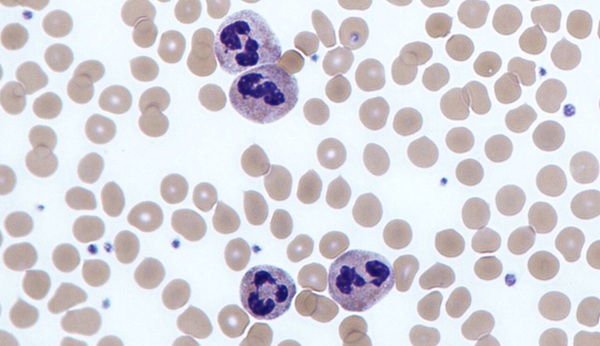
Stanford University Medical Center investigators identified neutrophils—the most abundant circulating white blood cells—as a previously unrecognized source of complement component 4A (C4A), a protein genetically associated with schizophrenia. The work centers on C4A within the complement cascade, a coordinated network of approximately 50 plasma proteins. The study posits a peripheral immune nexus for a protein also tied to brain synaptic remodeling.
C4A participates in the complement “bucket brigade,” becoming activated when a small fragment, C4-ana, is cleaved from the parent protein. In blood, activated complement can lyse microbial membranes and is consistently observed in samples from people with schizophrenia. In the brain, C4A has been implicated in synaptic pruning, a developmental process that can, when excessive, reduce synaptic density and cortical thickness.
Using a large gene‑expression database and testing blood from 10 anonymous volunteers, the researchers showed that human neutrophils synthesize C4A. Neutrophils from individuals with schizophrenia exhibited increased C4A production activity that correlated with clinical measures, yet contained less intracellular C4A than controls and showed no overall difference in plasma C4A levels. By contrast, plasma levels of C4-ana—the activation footprint of C4A—were elevated in schizophrenia, and neutrophil C4 protein abundance tracked with C4A gene copy number in affected individuals.
The findings integrate prior observations that C4A copy number is the strongest common genetic risk factor for schizophrenia and that plasma C4A concentrations reflect C4A gene dosage. The new study was published in Proceedings of the National Academy of Sciences, with earlier related work appearing in Translational Psychiatry. The investigators suggest that heightened neutrophil C4A production coupled with increased consumption may help explain elevated C4-ana in plasma.
The study raises the possibility that neutrophils contribute directly to schizophrenia pathophysiology and indicates that blocking neutrophil activation might not require blood–brain barrier penetration. The authors also note that blood‑based neutrophil assessments, combined with clinical data, could aid diagnostic evaluation, and they pose whether elevated neutrophil counts might presage symptom onset.
Related Links
Stanford Medicine