Rapid AI Tool Predicts Cancer Spatial Gene Expression from Pathology Images
Posted on 18 May 2026
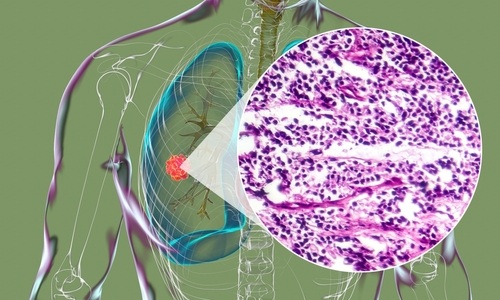
Gene expression profiling can inform tumor biology and treatment selection, but spatial assays remain costly and time-consuming. Results can take weeks and cost thousands of dollars, limiting large-scale analyses and broader clinical use. To address these limitations, researchers have developed an AI tool that can infer tumor spatial gene activity directly from routine pathology images, offering a faster and more accessible approach to spatial data in oncology.
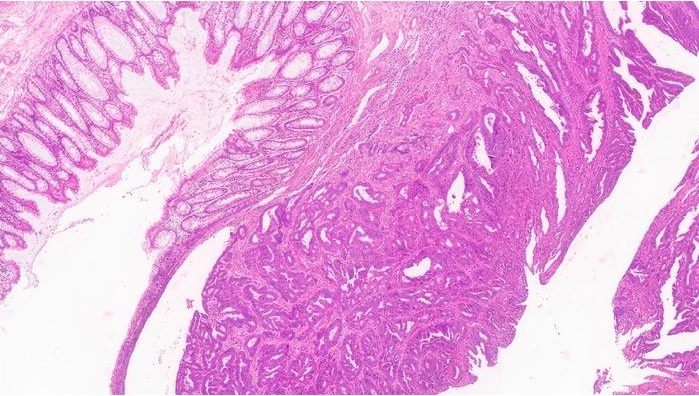
Cedars-Sinai Health Sciences University (Los Angeles, CA, USA) investigators developed Path2Space, an artificial intelligence (AI) tool that predicts spatial gene expression across tumor tissue using digital images of biopsy slides. Because tumors vary in composition and transcriptional activity, the method estimates expression at many points within the lesion. The process takes only minutes and costs significantly less than conventional spatial gene expression profiling.
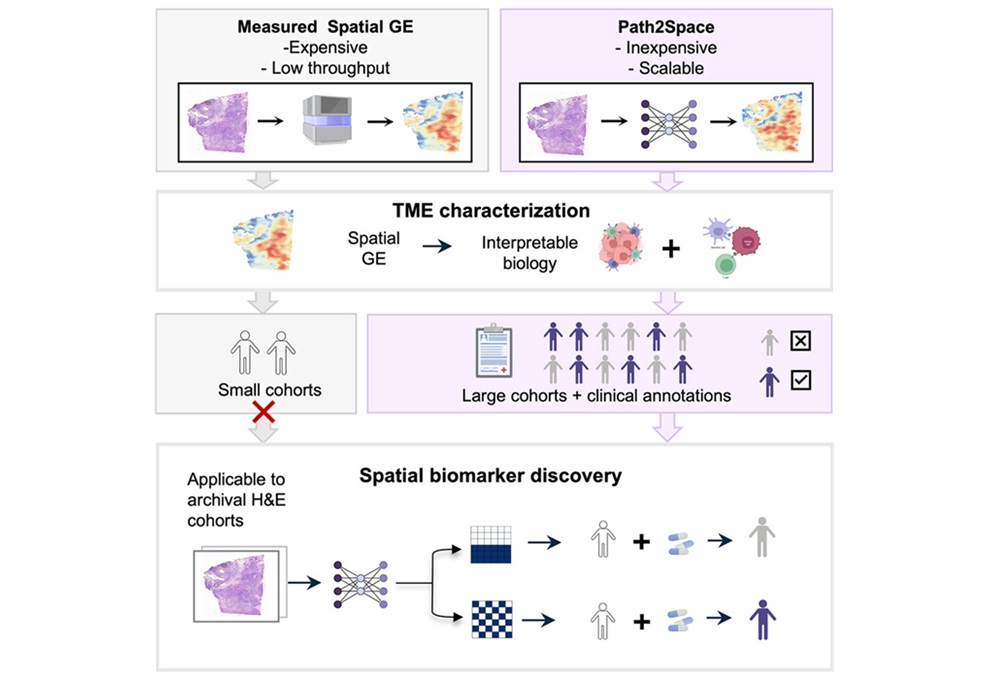
The team trained Path2Space on a large breast cancer cohort for which both pathology slides and spatial sequencing were available, then validated performance on three additional patient datasets. For each sample, the system predicted spatial expression for nearly 5,000 genes, and predictions matched measured expression across all three patient groups. The study is published in Cell, and investigators included affiliates of Cedars-Sinai Health Sciences University and the National Cancer Institute (NCI).
Beyond reconstruction of spatial transcriptomic maps, Path2Space is designed to support biomarker discovery by revealing spatial patterns that may align with treatment response and risk. High costs have previously constrained spatial datasets, with the largest accessible cohort cited at about 30 patients; the new approach enables analysis of slides from thousands of patients. The group reports ongoing efforts to increase resolution from clusters of 10–20 cells toward single-cell assessment, extend the approach to additional tumor types such as head and neck cancer, and evaluate the tool in clinical trials.
“This tool makes two major contributions. It will enable us and others to study larger datasets and understand the spatial structure of tumors. But what really motivates me is that, if we can successfully validate the tool in clinical trials, it could improve cancer care for patients,” said Eytan Ruppin, MD, Ph.D., deputy director of the Translational Research Institute at Cedars-Sinai and senior author of the study.
Related Links
Cedars-Sinai Health Sciences University