Sensitive Protein Marker Aids Diagnosis of Small Cell Prostate Cancer
Posted on 16 May 2026
Accurate identification of aggressive prostate cancer subtypes can be difficult when tumors lose expression of lineage markers used in routine pathology. Small cell carcinoma of the prostate, in particular, often lacks standard markers such as NKX3.1, complicating evaluation of both primary and metastatic lesions. These diagnostic gaps can hinder appropriate prognostic and therapeutic decisions in practice. New findings now demonstrate that a novel protein marker may help identify these difficult-to-classify tumors.
Researchers at the University of Texas MD Anderson Cancer Center (Houston, TX, USA) identified FOXA1 as a potentially highly sensitive diagnostic marker for small cell carcinoma of the prostate and possibly other aggressive subtypes. The marker addresses cases in which conventional prostatic markers are diminished or lost, creating uncertainty about tumor origin.
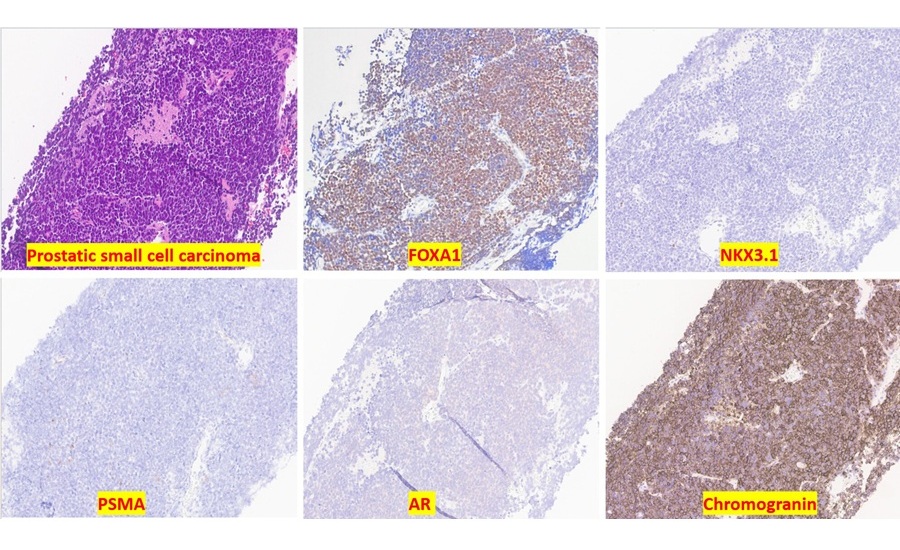
The study, published in Histopathology on May 7, 2026, evaluated FOXA1 protein expression in tumor tissue as a potential indicator of prostatic origin when standard markers such as NKX3.1 are absent. Investigators first analyzed The Cancer Genome Atlas database to identify FOXA1 as a candidate lineage marker. They then assessed FOXA1 expression across primary and metastatic prostate tumors, as well as other cancer types, to determine its diagnostic utility.
In these analyses, FOXA1 expression was notably higher in prostate cancer and reached levels similar to NKX3.1. Crucially, detectable FOXA1 was observed in 80% of primary small cell carcinomas of the prostate and in 57% of metastatic small cell carcinomas, indicating that FOXA1 remained present in a substantial fraction of tumors that had lost NKX3.1. These data support FOXA1 as a useful addition to diagnostic panels for aggressive variants that are otherwise difficult to classify.
The study notes that additional evaluation is needed to define FOXA1 expression patterns in other aggressive prostate cancer subtypes and to clarify underlying molecular mechanisms. The authors also indicate that prospective clinical studies will be required to validate FOXA1 for routine diagnostic use.
“The detectable expression of FOXA1 in most small cell carcinomas of the prostate makes it a potentially viable option for diagnosing aggressive subtypes that lose conventional markers,” said Jianping Zhao, M.D., Ph.D., assistant professor of Anatomic Pathology at The University of Texas MD Anderson Cancer Center.
“While further study is needed to understand the specific molecular mechanisms, we are encouraged by these results, which could help pathologists make prognostic and therapeutic decisions to improve patient care,” added Dr. Zhao.
Related Links
UT MD Anderson Cancer Center