Large-Scale Genomic Surveillance Tracks Resistant Bacteria Across European Hospitals
Posted on 14 May 2026
Antimicrobial resistance (AMR) poses a growing threat to patient safety, with carbapenem-resistant Enterobacterales causing difficult-to-treat infections and leaving clinicians with limited therapeutic options. Hospitals are increasingly facing high-risk lineages and mobile carbapenemase genes that can accelerate transmission across healthcare settings and borders. Robust genomic surveillance can help track this spread and inform coordinated responses. New findings now present a Europe-wide genomic survey of carbapenem- and/or colistin-resistant Enterobacterales in clinical settings.
The European Centre for Disease Prevention and Control (ECDC) coordinated the Carbapenem- and/or Colistin-Resistant Enterobacterales (CCRE) survey, an integrated genomic surveillance initiative. The program combines epidemiological and microbiological inputs with whole-genome sequencing to delineate circulating lineages and resistance determinants across hospitals. By structuring data collection and analysis at continental scale, it advances routine use of genome-based methods for AMR surveillance.
Conducted in collaboration with the Public Health Agency of Sweden and The Centre for Genomic Pathogen Surveillance, Pandemic Sciences Institute, University of Oxford, the survey aggregated 2019 data from more than 300 hospitals in 36 countries. It is the second large-scale structured genomic effort following the European Survey of Carbapenemase-producing Enterobacteriaceae (EuSCAPE) in 2013–2014, marking a shift toward integrated Europe-wide genomic surveillance. Beyond sampling, participating countries underwent capacity assessments, training, and external quality assurance exercises to embed genomic workflows in national reference laboratories.
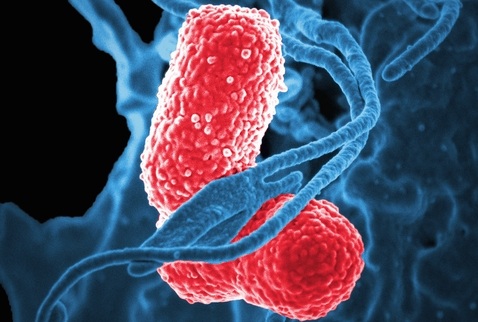
For Klebsiella pneumoniae, carbapenem-resistant high-risk lineages identified during EuSCAPE persisted across hospitals. The survey also documented increased acquisition of carbapenemase genes by high-risk K. pneumoniae lineages, expansion of newly emerging high-risk lineages, and wider spread of isolates carrying virulence genes.
For Escherichia coli, warning signals included more frequent acquisition of carbapenemase genes by high-risk sequence types, greater clonal spread of successful multidrug-resistant lineages, and increased detection of isolates harboring the NDM-5 carbapenemase gene. The findings depict heterogeneous country-level patterns, ranging from sporadic cases to endemic circulation, and indicate a high risk that carbapenem-resistant E. coli could become endemic without additional public health action.
Results were published in The Lancet Microbe in separate articles on K. pneumoniae and E. coli, accompanied by a detailed ECDC report. The CCRE dataset provides reference information to guide further investigations of carbapenem-resistant Enterobacterales and to inform public health action. Data collection for the third European Survey of carbapenem-resistant Enterobacterales (CRE25) is underway, using a simplified sampling protocol and faster reporting enabled by increased whole-genome sequencing capacity at national reference laboratories.
Related Links
European Centre for Disease Prevention and Control