Blood-Based “Ageing Clock” Helps Predict Dementia Risk and Earlier Onset
Posted on 14 May 2026
Dementia imposes a growing health burden, affecting an estimated 982,000 people in the UK, with cases projected to reach 1.4 million by 2040. Earlier identification of those most likely to develop disease remains difficult for clinicians, particularly before symptoms emerge. Biological age, which can diverge from chronological age, may capture latent risk through blood-based metabolic signatures. A new study shows that a metabolomic “ageing clock” used alongside genetic data stratifies dementia risk and signals earlier age of onset.
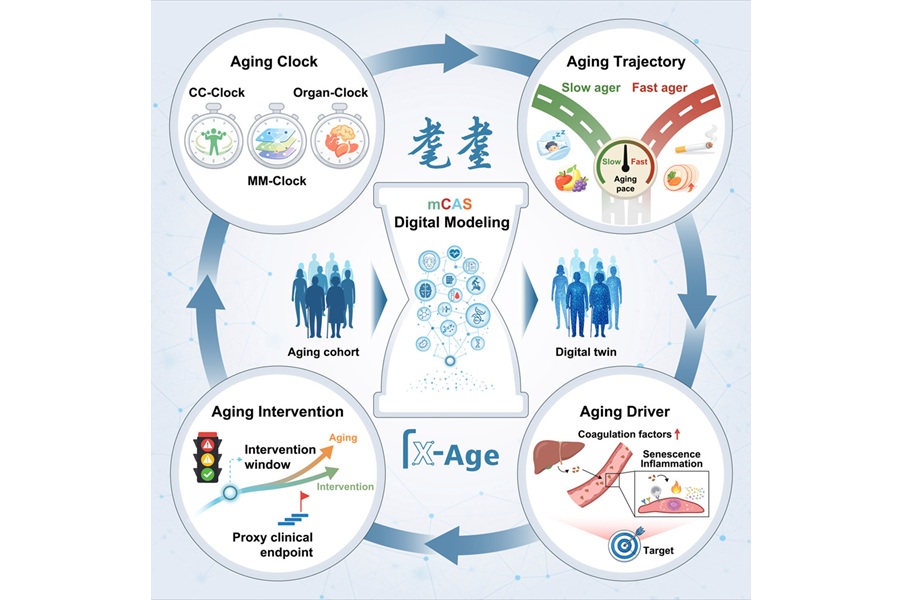
King’s College London researchers evaluated a blood-based metabolomic ageing clock that estimates biological age from plasma metabolites. The approach calculates the difference between metabolomic age and chronological age; this metric, termed MileAge delta, indicates whether an individual is biologically older or younger than expected. The analysis tested whether this biological ageing measure is associated with incident dementia and age at diagnosis.

The observational study assessed more than 220,000 UK Biobank participants, incorporating measures of genetic risk, blood metabolites, dementia incidence, and age of onset. Nearly 4,000 participants developed dementia during follow‑up. Polygenic risk was captured using the apolipoprotein E (APOE) ε4 allele, including individuals carrying two copies of ε4.
Individuals whose biological age exceeded chronological age by more than one standard deviation (about 16% of participants) had a 20% higher risk of developing dementia over time than those whose biological age was notably younger. The association was particularly marked for vascular dementia, where risk was 60% higher. Participants with both advanced biological ageing and the highest genetic risk (two APOE ε4 alleles) were up to ten times more likely to develop dementia than the average participant, and the two risk factors appeared to act largely independently.
Findings were published on May 13, 2026, in Alzheimer’s & Dementia: The Journal of the Alzheimer’s Association. The work was supported by the National Institute for Health and Care Research (NIHR) Maudsley Biomedical Research Centre, and polygenic score analyses used the GenoPred pipeline supported by NIHR Maudsley BRC.
“Our findings suggest that biological ageing data can help identify individuals at risk of dementia before clinical symptoms emerge. By combining genetic factors with potentially modifiable factors captured in biological ageing, we may be able to develop preventative strategies, potentially based on a simple blood test,” said Dr Julian Mutz, King’s Prize Research Fellow at the Institute of Psychiatry, Psychology & Neuroscience (IoPPN), King’s College London.
“Dementia affects almost a million people in the UK. Finding ways to detect and treat it earlier will help not only those affected but the families, friends and medical staff who support them. By combining genetics and information on biological ageing, this work from the NIHR Maudsley Biomedical Research Centre team could help us do exactly that - spot dementia sooner and delay it or even stop it in its tracks,” said Professor Marian Knight, Scientific Director for NIHR Infrastructure.
Related Links
King’s College London