At-Home Blood and Cognitive Tests Support Dementia Risk Stratification
Posted on 12 May 2026
Dementia places a substantial burden on patients and health systems, and identifying individuals at elevated risk remains difficult at scale. In the UK, almost a million people are estimated to be living with the condition, underscoring the need for accessible screening approaches. Remote tools that combine biological signals with cognitive measures may help triage who needs further assessment. A new study shows that an at-home finger-prick blood test paired with online brain testing may help stratify dementia risk.
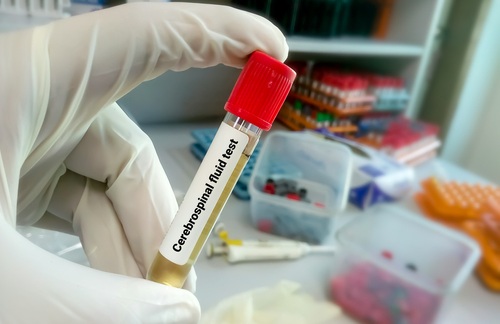
Researchers at the University of Exeter evaluated an at-home approach that pairs a finger-prick capillary blood test—returned to a laboratory by post—with online cognitive assessments completed from home. The method integrates remote collection of a small blood sample with unsupervised tests targeting memory, attention, and executive function. It is designed to link circulating protein markers associated with dementia to performance on standardized cognitive tasks completed via the internet.
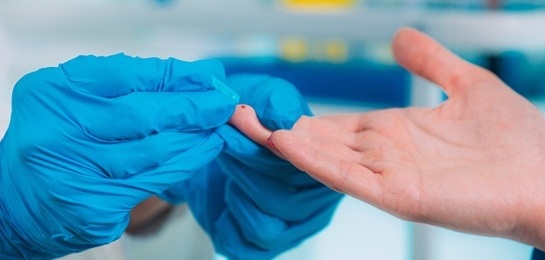
The team worked within the online PROTECT study, in which more than 30,000 UK participants aged over 40 undertake regular cognitive testing. In this investigation, 174 PROTECT participants administered the at-home finger-prick test themselves and mailed samples for analysis. The researchers quantified two proteins: p-tau217, which is linked to Alzheimer’s disease, and GFAP, linked to broader brain decline. Performance on the online brain tests correlated with both blood markers, with tau showing the strongest associations, enabling classification of participants into low, medium, and high risk categories.
The study was published online in Nature Communications on May 6, 2026. It was led by the University of Exeter and funded by the National Institute for Health and Care Research (NIHR) Exeter Biomedical Research Centre, with additional support from the NIHR HealthTech Research Centre in Brain Health and the NIHR Applied Research Collaboration South West (PenARC). The researchers conclude that at-home testing could help identify those at highest risk for prioritization to further testing, treatment, and support, while also indicating individuals at low risk who could be reassured and those at moderate risk who may benefit from monitoring and risk-reduction guidance.
“Our previous research has shown that a finger-prick blood test can effectively be taken at home and posted to labs, and that we can identify the biomarkers in blood linked to dementia. This new study builds on that to show that we can link these biomarkers with performance on brain tests, giving us a potential way to predict risk of dementia,” said Professor Anne Corbett, of the University of Exeter Medical School.
“The potential of this combination of cognitive and blood tests, both of which can be done at home, is really exciting. Not only could it reduce the burden on the NHS by screening people in their own homes rather than in hospitals or clinics, but it also might mean we can identify people with dementia earlier, tailor treatments more effectively, and improve outcomes for patients. This is a fantastic example of research teams in NIHR infrastructure working together to deliver real change for the public and the NHS, in line with government priorities,” said Professor Marian Knight, NIHR Scientific Director for NIHR Infrastructure.
Related Links
University of Exeter Medical School