Blood Test Maps Tumor Microenvironment to Predict Immunotherapy Response
Posted on 08 May 2026
Immunotherapy has transformed cancer care, yet durable benefit remains limited to a subset of patients, and clinicians still lack reliable tools to predict response before treatment begins. Most liquid biopsies focus primarily on tumor-derived signals, offering limited insight into the tumor microenvironment that strongly influences therapeutic outcomes. Addressing this gap, researchers have now developed the first blood test to map the complex ecosystem surrounding cancer cells, providing a more accurate way to predict which patients across multiple cancer types are likely to benefit from immunotherapy.
Mayo Clinic (Rochester, MN, USA) and Stanford Medicine (Stanford, CA, USA) researchers developed the first blood test to characterize the tumor microenvironment by identifying distinct cellular “neighborhoods,” or spatial ecotypes, associated with outcomes. The findings were published in Nature on May 6, 2026. The approach is designed to inform precision oncology decisions across cancers and therapies.
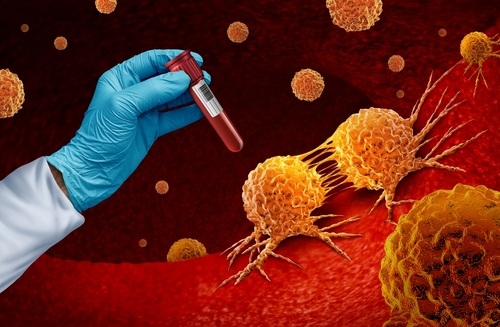
The team utilized spatial transcriptomics, an advanced technique that maps how different cells interact within a tumor, to analyze more than 100 tumor specimens spanning 10 distinct cancer types. Using this approach, they identified nine distinct spatial ecotypes, cellular neighborhoods composed of immune and stromal elements surrounding cancer cells. They found that these core spatial ecotypes were conserved across 17 cancer types. Some ecotypes were predominantly located near the tumor-normal interface, whereas others appeared more frequently deeper within tumor tissue. Several ecotypes also showed strong associations with immunotherapy response and survival outcomes, highlighting their potential utility for treatment stratification.
The researchers further observed that immune cells behaved differently depending on the neighborhood in which they resided. For example, CD8 T cells located in separate ecotypes expressed distinct gene programs influenced by surrounding cells, indicating that cellular function within the tumor microenvironment depends heavily on local interactions. The investigators also identified shared gene-expression programs across different cell types within the same ecotype, revealing broader neighborhood-specific biological states that extended beyond individual cell identity.
To translate these findings into a blood-based assay, the team proposed that neighborhood-specific gene-expression patterns could be inferred from circulating cell-free DNA (cfDNA). Dying cells release DNA fragments into the bloodstream that carry methylation signatures linked to actively expressed genes. Leveraging this principle, the researchers developed an artificial intelligence (AI)-based platform called Liquid EcoTyper to reconstruct tumor microenvironment ecotypes from these methylation patterns in blood samples. The approach enabled noninvasive profiling of the cellular ecosystems surrounding tumors and was validated by comparing ecotypes predicted from biopsy and surgical tissue specimens with those independently derived from matched blood samples from the same patients.
The blood-based test could support noninvasive longitudinal monitoring of how a patient’s tumor microenvironment evolves during treatment. In early data, investigators observed that shifts in spatial ecotypes may indicate treatment response or emerging resistance months before such changes become detectable on conventional imaging. Although the initial study focused primarily on melanoma, the approach also showed potential across additional cancers, including lung and bladder cancer, where treatment decisions are often complex and time sensitive.
The researchers believe the AI-assisted platform could eventually extend beyond oncology applications. Additional studies are now underway to validate the assay in larger patient populations and support clinical adoption, while also exploring whether distinct tumor microenvironment patterns can predict response to therapies beyond immunotherapy.
“This is a complete paradigm shift. Until now, liquid biopsies or blood tests have focused almost entirely on tumor cells. For the first time, we can use a simple blood test to understand the tumor's microenvironment, which is critical for determining how patients respond to modern cancer therapies,” said Aadel Chaudhuri, M.D., Ph.D., professor of radiation oncology at Mayo Clinic and co-senior author of the study.
“This technique has the potential to be much more holistic and powerful than any current method of tracking the tumor microenvironment. The clinical possibilities are exciting,” said Aaron Newman, PhD, associate professor of biomedical data science at Stanford Medicine and co-senior author of the study.
Related Links
Mayo Clinic
Stanford Medicine



.jpg)