Blood Test Enables Early Detection of Multiple Myeloma Relapse
Posted on 28 Apr 2026
Bone marrow biopsies remain central to diagnosing and monitoring multiple myeloma, yet the procedure is painful, invasive, and often repeated over time. Older patients—who represent most new cases—can face heightened risks due to frailty and mobility challenges. Clinicians also contend with sampling variability because disease can be patchy within the marrow. A new blood-based assay now offers a noninvasive approach to detect and track disease-specific proteins with higher sensitivity over time.
Rapid Novor, co-founded by Dr. Bin Ma, a computer science professor at the University of Waterloo, has developed EasyM, a laboratory test that measures monoclonal immunoglobulin (M-protein). This established biomarker of myeloma can be analyzed from a peripheral blood draw. Following sample collection, the specimen is processed in a clinical laboratory to determine the presence of M-protein and quantify its concentration. Designed for serial monitoring, the test enables clinicians to compare M-protein levels over time to assess treatment response and detect emerging relapse.
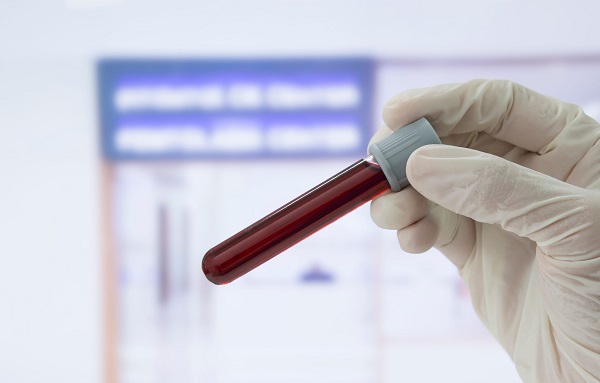
EasyM’s analytical strategy centers on de novo protein sequencing, a computational biology technique used to determine a protein’s amino acid sequence directly from experimental data. By resolving the patient-specific M‑protein sequence, the method distinguishes the malignant clone from structurally similar, nonpathologic immunoglobulins in circulation, addressing interference that limits traditional measurements. In reported use, the assay detected relapse two to eleven months earlier than the current standard of care, a lead time attributed to its high analytical sensitivity and the feasibility of frequent, painless sampling.
The company reports it has received a license from the Ontario Ministry of Health, allowing clinics across Ontario to use EasyM. Because M‑protein produced by myeloma cells circulates systemically, blood-based assessment can avoid misleading results from site-limited marrow sampling. Research conducted by Dr. Ma found instances in which patients considered myeloma‑free by biopsy still had detectable M‑protein in blood, underscoring the value of systemic sampling for disease surveillance.
"The amino acid sequence can help us differentiate the M-protein from other similar but normal proteins in the blood," explained Dr. Ma, a pioneer in computational biology. "The experimental data is very noisy and has errors. Our team developed the de novo sequencing algorithm to figure out the sequence from the noisy data."
“This problem was brought to us at a conference, and we happen to have the technology. By chance, if you have a solution to a real-world problem, you feel like it’s your responsibility to make it happen to the people who need it the most,” said Dr. Ma.
Related Links
University of Waterloo
Rapid Novor