Composite Blood Biomarkers Enable Early Detection of Common Cancers
Posted on 23 Apr 2026
Early diagnosis of colorectal, lung, and ovarian cancers remains challenging, with many patients identified only after tumors have begun to spread. A scalable blood test could expand access to screening, but robust circulating markers have been limited, making it difficult to detect disease at earlier stages. Leveraging routinely collected samples offers a potential path to improve early detection and assess disease stage. New findings now show that composite blood biomarkers can detect these cancers with performance comparable to or exceeding established tests.
Uppsala University researchers developed composite proteomic and metabolomic plasma biomarker panels designed for early detection of colorectal, lung, and ovarian cancers. The approach combines multiple circulating proteins and small-molecule metabolites into diagnostic signatures. By integrating these molecular classes, the panels aim to differentiate cancer from controls and provide information relevant to tumor stage.
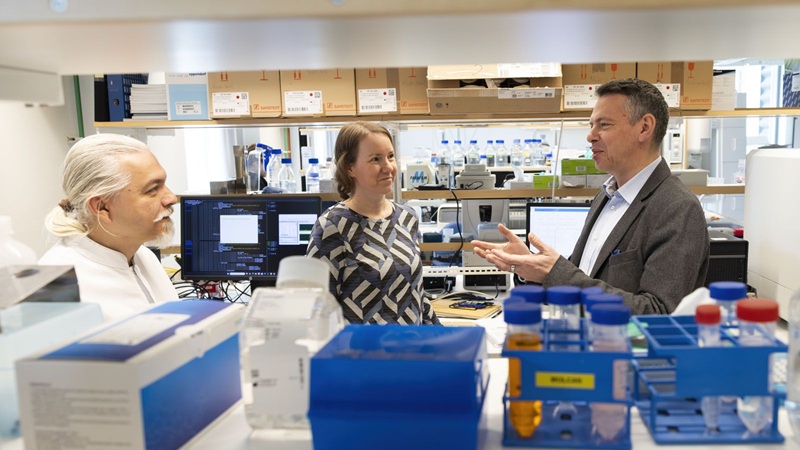
The study evaluated nearly 2,500 blood samples sourced from two large biobanks. The U-CAN database supplied samples from cancer patients, while EpiHealth provided control samples. Investigators screened a large number of proteins to identify those that differed between cancer and noncancer samples, then built composite biomarker sets from the most informative features.
Results highlighted disease-specific panels: two proteins used together detected ovarian cancer, while a four‑protein set identified colorectal and lung cancers. Across indications, the composite biomarkers performed comparably to, and in some instances better than, established tests based on blood or stool. Panels that incorporated metabolites were more effective at distinguishing tumor stages than protein‑only sets, particularly for ovarian and lung cancers.
The authors noted potential applications for tumor‑type–specific biomarkers in patients presenting with nonspecific abdominal symptoms, where distinguishing among abdominal cancers is clinically challenging. The work is published in Molecular Cancer. Next steps include collecting self‑sampled blood from 100,000 study participants to determine whether the biomarkers can detect tumors at earlier stages, with the stated goal of reducing cancer mortality.
Related Links
Uppsala University