New CLIA Status Brings Mass Spectrometry Steroid Testing to Routine Labs
Posted on 30 Mar 2026
Steroid hormone measurement is a core application of clinical mass spectrometry, which is widely regarded as a diagnostic gold standard. Access to these high-specificity methods has often been constrained to specialized laboratories because of complex workflows and the need for expert operators. A newly designated set of mass spectrometry steroid assays now carries Clinical Laboratory Improvement Amendments of 1988 (CLIA) “moderate complexity” status to support routine use on an automated platform.
Roche’s Ionify steroid assays for mass spectrometry have been classified by the U.S. Food and Drug Administration as “moderate complexity” under the Clinical Laboratory Improvement Amendments of 1988 (CLIA). The panel includes Estradiol, DHEA, DHEA‑S, Progesterone, 17‑Hydroxyprogesterone, and Androstenedione. The assays run on the cobas i 601 analyzer as part of the cobas Mass Spec solution.
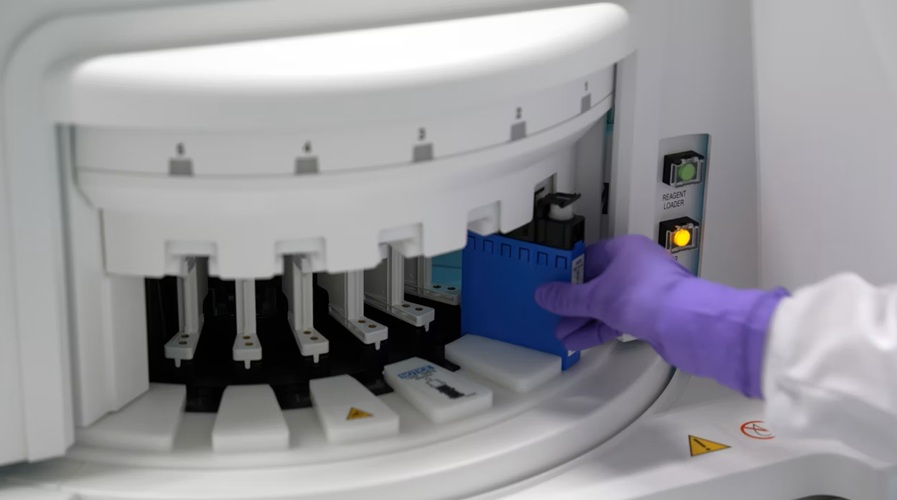
According to the company, the new classification broadens access to advanced testing through a fully automated and standardized workflow on the cobas i 601 analyzer. By combining the sensitivity and specificity of mass spectrometry with an easy-to-use, standardized process, the cobas Mass Spec solution is designed to streamline traditionally complex testing and help reduce variability across laboratories. The expanded steroid testing menu is intended to bring mass spectrometry workflows into routine clinical laboratories.
Together with the previously launched Ionify 25‑Hydroxy Vitamin D total assay, the Ionify steroid assays form a growing U.S. menu of mass spectrometry tests carrying the CLIA “moderate complexity” designation, enabling laboratories to offer these assays without relying on specialized operators. Roche reports it is continuing to develop additional clinical mass spectrometry assays to extend system and assay availability, with future tests in development and under regulatory review.
“This technology fundamentally transforms mass spectrometry, moving it from an intricate specialty process to a seamless engine for routine diagnostics. By delivering a broad and expanding mass spectrometry menu with automation and standardization, we are empowering laboratories to operate more efficiently and enabling clinicians to make critical decisions sooner – helping ensure the right treatment reaches the right patient without delay.” said Brad Moore, President and CEO of Roche Diagnostics North America.
Related Links
Roche Diagnostics