Rapid Biosensor Detects Drug Sensitivity in Breast Tumors
Posted on 30 Mar 2026
Chemotherapy selection for breast cancer is challenged by heterogeneous tumor responses. Conventional chemosensitivity assays can be slow, require large sample volumes, and struggle with complex biological matrices, limiting same-day decision-making. Rapid, accurate profiling methods that work on minimal, unprocessed material are needed to inform treatment planning. To help address this challenge, researchers have created a biosensor that quickly identifies paclitaxel sensitivity in breast cancer.
Hefei Institutes of Physical Science, Chinese Academy of Sciences developed MetaRing, a matrix‑robust programmable plasmonic ring biosensor built on the coffee‑ring effect. By tuning nanoparticle concentration and evaporation temperature, the system drives deterministic nanoparticle assembly into hierarchical structures with dense, stable nanogaps. These features enhance detection stability and robustness across water, buffers, protein‑rich media, and complex cell lysates.
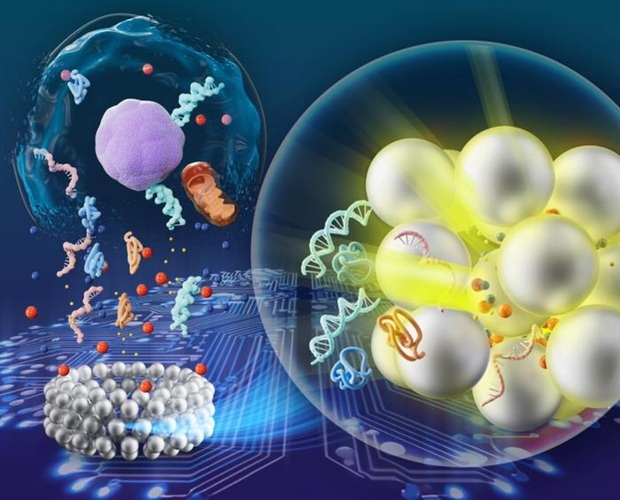
MetaRing integrates surface‑enhanced Raman spectroscopy (SERS) to capture molecular fingerprints with high sensitivity, enabling rapid acquisition of metabolic spectra that reflect tumor cell responses to paclitaxel. The workflow requires only trace amounts of biological material and is label‑free, eliminating the need for cell culture expansion. In experiments, the platform reliably identified paclitaxel sensitivity signatures in drug‑resistant breast cancer cell lines, xenograft models, and patient‑derived biopsy tissues.
Coupled with a lightweight one‑dimensional convolutional neural network (CNN), MetaRing completed drug sensitivity assessments within 10 minutes. The system achieved over 92% classification accuracy in a clinical cohort using SERS‑derived metabolic spectra. The workflow delivered results within minutes using minimal sample input.
The study was published in Biosensors and Bioelectronics. According to the team, the approach offers a practical strategy for rapidly evaluating paclitaxel sensitivity, supporting personalized chemotherapy and addressing inter‑patient variability and tumor heterogeneity. The team describes the platform as matrix‑robust across diverse biological environments.