AI-Driven Diagnostic Demonstrates High Accuracy in Detecting Periprosthetic Joint Infection
Posted on 03 Mar 2026
Periprosthetic joint infection (PJI) is a rare but serious complication affecting 1% to 2% of primary joint replacement surgeries. The condition occurs when bacteria or fungi infect tissues around an implanted artificial joint and, in severe cases, can lead to amputation or death. Diagnosing PJI is challenging due to variable symptoms, co-morbidities, and the absence of a gold standard test in the U.S. Now, a new machine learning-based diagnostic tool has demonstrated significantly improved accuracy and confidence in diagnosing PJI compared to traditional approaches.
The study evaluated the SynTuition algorithm, developed by Zimmer Biomet (Warsaw, IN, USA), that analyzes results from the company’s Synovasure comprehensive PJI test panel, which measures 11 synovial fluid biomarkers. Unlike traditional tests that rely heavily on culture results, SynTuition identifies patterns in biomarker data to generate a continuous probability score from 0 to 100, estimating a patient’s likelihood of infection. Scores of 80 or higher indicate high probability, below 20 indicate low probability, and values between 20 and 80 are considered intermediate. The tool quantifies uncertainty, helping clinicians make more informed treatment decisions.
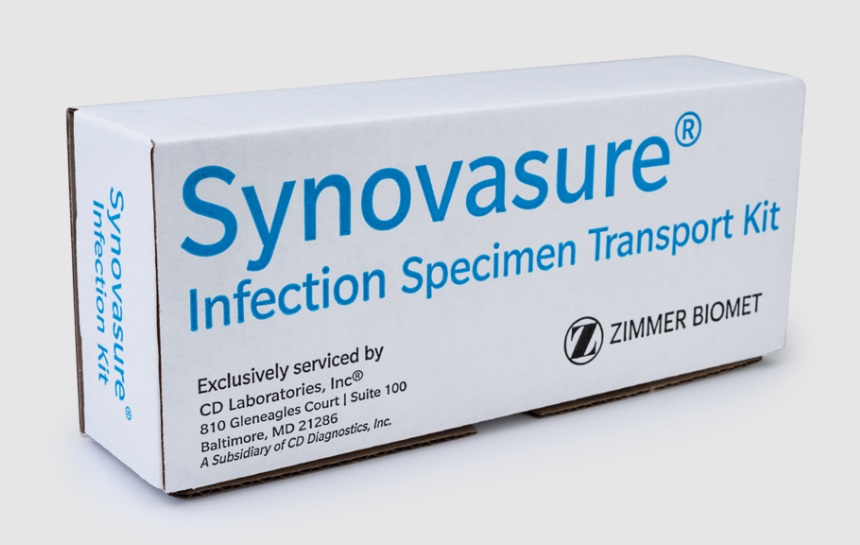
The study, published in Diagnostics, compared SynTuition’s performance with diagnoses made by 12 physicians across 274 real-world cases. The algorithm matched expert diagnoses 96% of the time, outperforming the pooled physician group, which matched experts 91% of the time. In inconclusive cases, physicians showed indecision rates ranging from 38% to 48%, while SynTuition produced definitive diagnoses with 87% agreement against experts. The algorithm reduced uncertain results to just 0.4%. It was trained on one of the largest synovial biomarker datasets and validated on an independent cohort of 20,818 samples, demonstrating strong diagnostic accuracy without relying on culture data.
By generating patient-specific probability scores rather than binary results, the tool may reduce unnecessary revision surgeries and prolonged antibiotic treatments. More accurate early diagnosis could also help prevent failed revision procedures, repeated surgeries, and extended hospital stays. As machine learning continues to integrate into orthopedic care, tools like SynTuition may strengthen clinical decision-making, particularly in complex or borderline cases where traditional tests provide conflicting information.
“This study shows that SynTuition can meaningfully support clinicians, especially when cases fall into a gray area where traditional tests offer conflicting or unclear results,” said orthopedic surgeon Dr. James Baker, a study co-author. “We feel it is a valuable addition to the clinical pathway to improve patient safety, with the added benefit of reducing the cost of potentially unnecessary care.”
Related Links:
Zimmer Biomet