Hidden Gut Viruses Linked to Colorectal Cancer Risk
Posted on 27 Feb 2026
Colorectal cancer (CRC) remains a leading cause of cancer mortality in many Western countries, and existing risk-stratification approaches leave substantial room for improvement. Although age, diet, and lifestyle are established contributors, the precise biological triggers are not fully defined, directing increasing attention to the gut microbiome as a potential driver of disease. Within this complex microbial ecosystem, isolating clinically meaningful signals has proven challenging for laboratories and clinicians alike. Investigators now report the identification of a previously undescribed virus harbored by a common gut bacterium that is detected significantly more often in patients with CRC.
Investigators at the University of Southern Denmark and Odense University Hospital identified distinct bacteriophages, which are viruses that infect bacteria, within Bacteroides fragilis that are associated with CRC. The team describes these viruses as previously unrecognized types. The findings suggest that interactions between the bacterium and its resident viruses may play a role in CRC biology.
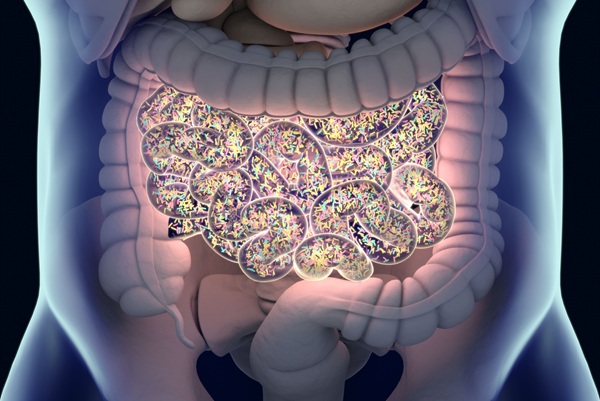
The work originated in Denmark using data from a population study covering around two million citizens. Researchers first focused on patients with serious bloodstream infections caused by Bacteroides fragilis; a subset of these patients received a CRC diagnosis within weeks. Comparative analysis of bacterial genetic material from patients with and without cancer showed that B. fragilis isolates from cancer patients more often harbored specific prophage infections. This pattern was initially detected in a relatively small number of Danish samples and subsequently examined in larger international datasets.
To test generalizability, stool samples from 877 individuals with and without CRC across Europe, the United States, and Asia were analyzed. Patients with CRC were approximately twice as likely to carry traces of the identified viruses. In preliminary analyses, selected viral sequences identified about 40% of cancer cases, while most healthy individuals did not carry them.
The investigators emphasize that the study demonstrates a statistical association and does not establish causality, noting that the findings are at an early, experimental stage. They also suggest that stool testing for these viruses could be explored as a potential tool to identify individuals at increased risk. The study was published on February 7 in Nature Communications Medicine. Ongoing projects include culturing B. fragilis carrying the virus in an artificial gut model, examining tumor tissue for the bacterium and virus, and conducting studies in cancer-prone mice.
“The number and diversity of bacteria in the gut is enormous. Previously, it has been like looking for a needle in a haystack. Instead, we have investigated whether something inside the bacteria – namely viruses – might help explain the difference,” says Flemming Damgaard, molecular biologist and PhD at the Department of Clinical Microbiology at Odense University Hospital and the University of Southern Denmark.
"We do not yet know why the virus is present, but we are investigating whether it contributes to the development of colorectal cancer. In the short term, we can investigate whether the virus can be used to identify individuals at increased risk," Damgaard added.
Related Links
University of Southern Denmark
Odense University Hospital






 Analyzer.jpg)