Genetic Test Predicts Radiation Therapy Risk for Prostate Cancer Patients
Posted on 26 Feb 2026
External beam radiation therapy is widely used to treat localized prostate cancer, which has a five-year survival rate exceeding 99%. However, more than 20% of patients develop persistent urinary side effects months or years after treatment, known as late genitourinary toxicity. Although different radiation regimens offer similar cancer control, patients respond differently due to underlying genetic factors, and clinicians have lacked tools to predict these risks. A newly launched genetic test now enables physicians to assess an individual patient’s likelihood of developing long-term urinary toxicity, supporting more personalized radiation treatment decisions.
MiraDx (San Diego, CA, USA) has announced the U.S. commercial launch of PROSTOX Standard, a clinically validated genetic test designed for patients receiving conventionally fractionated radiation therapy (CFRT) or moderately hypofractionated radiation therapy (MHFRT). The test complements the company’s PROSTOX Ultra offering, which is intended for patients being considered for stereotactic body radiation therapy (SBRT).
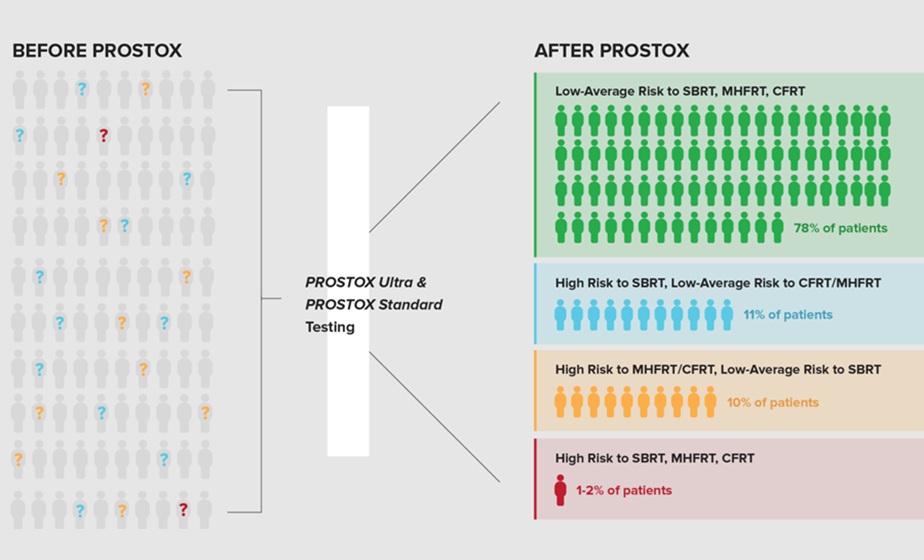
PROSTOX tests analyze inherited genetic variants in microRNAs and related pathways that influence how individuals tolerate radiation. Using a simple cheek swab, the tests deliver results within five to seven days, providing actionable information to guide treatment selection across CFRT, MHFRT, or SBRT regimens. PROSTOX Standard is designed to predict toxicity following CFRT, delivered in 37–45 fractions over seven to nine weeks, or MHFRT, delivered in 20–28 fractions over four to five weeks. PROSTOX Ultra evaluates risk associated with SBRT, typically administered in five to seven fractions over approximately 10 days.
The tests are clinically validated to predict late-onset genitourinary toxicity, including urinary urgency, leakage, and discomfort. Importantly, a high-risk result for one radiation regimen does not necessarily translate to high risk for another, and fewer than 2% of patients are identified as high risk across all evaluated regimens.
By offering risk assessment tailored to specific radiation schedules, the PROSTOX platform expands access to biology-driven toxicity prediction for a broader group of prostate cancer patients. The tool allows clinicians to compare treatment options based not only on tumor control but also on individualized side-effect risk profiles. For patients identified as high risk for multiple regimens, alternative interventions may be considered. The launch of PROSTOX Standard marks a step toward integrating precision medicine principles into radiation oncology to improve quality of life outcomes.
“PROSTOX tests bring precision medicine to radiation oncology by shifting the focus from the tumor alone to determining the most effective treatment approach for each patient based upon their unique biology and resulting treatment risks,” said Melissa C. Stoppler, MD, Executive Vice President of Medical Affairs at MiraDx. “Having information about which type of radiation each patient will tolerate best allows clinicians to better tailor radiation treatments to patients, helping them avoid future long-term side effects.”
Related Links:
MiraDx