New Tool Maps Chromosome Shifts in Cancer Cells to Predict Tumor Evolution
Posted on 03 Feb 2026
As tumors grow, cancer cells constantly make errors during DNA copying and division. Many of these errors involve the gain or loss of entire chromosomes, resulting in a diverse range of chromosome configurations within the same tumor. Until now, determining which of these states promote cancer cell survival has been difficult, as the number of possible combinations is vast and most methods capture only static snapshots or population averages. Researchers at Moffitt Cancer Center (Tampa, FL, USA) have now developed a computational approach that predicts how tumors navigate whole-chromosome gains and losses over time.
Chromosomal instability can drive rapid, large-effect changes in gene dosage that enable major adaptive jumps in cancer cells, but predicting which karyotypes will persist has been challenging. This work addresses that gap by focusing on whole-chromosome alterations that quickly reshape growth and stress responses and by modeling how treatment-induced mis-segregation influences evolutionary paths. The findings reveal measurable rules governing chromosomal shifts, providing a foundation for anticipating evolutionary trajectories in malignancy.
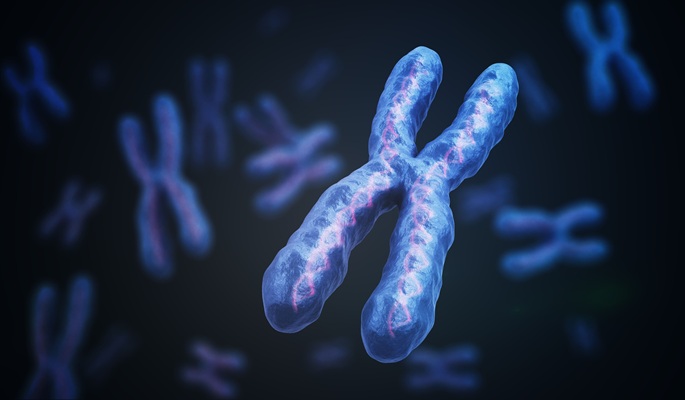
The innovation, called ALFA-K, is a computational approach that uses longitudinal, single-cell measurements to reconstruct how cancer cells transition among chromosome states and to infer which configurations are favored by selection. ALFA-K accounts for ongoing chromosomal instability and builds local fitness landscapes that indicate whether a specific gain or loss is advantageous or deleterious given a cell’s current karyotype. By incorporating the rate of chromosome errors, the method can show how chemotherapy-driven mis-segregation accelerates movement across these landscapes and can push tumors toward states more tolerant of instability.
In the study, ALFA-K estimated the fitness of more than 270,000 distinct chromosome configurations, revealing that cancer evolution is not random but follows defined rules shaped by karyotype, evolutionary dynamics, and treatment-related stress. The tool quantifies the buffering effect of whole-genome doubling—when a cell copies all of its chromosomes—by identifying the threshold at which doubling becomes advantageous, transforming a previously descriptive observation into a predictable evolutionary event. The research was conducted at Moffitt Cancer Center and published in Nature Communications.
ALFA-K moves cancer research beyond static snapshots of tumor appearance toward anticipating how tumors are likely to evolve over time. In the future, this approach could enable clinicians to better interpret serial biopsies, detect when a tumor is nearing a high-risk evolutionary shift, and select therapies that restrict cancer’s capacity to adopt harmful chromosomal configurations. The ultimate goal is evolution-aware cancer therapy, focused on predicting tumor adaptation rather than responding after resistance has already taken hold.
Related Links
Moffitt Cancer Center