AI-Generated Sensors Open New Paths for Early Cancer Detection
Posted on 13 Jan 2026
Cancers are far easier to treat when detected early, yet many tumors remain invisible until they are advanced or have recurred after surgery. Early-stage disease often produces signals that are too weak for conventional diagnostic tools to detect reliably. To overcome this challenge, researchers are developing ultra-sensitive molecular sensors that can amplify subtle biological signals linked to cancer. A new artificial intelligence (AI)-driven approach now shows how such sensors could enable early cancer detection using a simple urine test.
In research led by the Massachusetts Institute of Technology (MIT, Cambridge, MA, USA), in collaboration with Microsoft Research (Redmond, WA, USA), the team developed an AI system called CleaveNet to design short protein sequences, or peptides, that are selectively cut by proteases, enzymes that are often overactive in cancer cells. These peptides are attached to nanoparticles, creating molecular sensors that respond to cancer-associated protease activity anywhere in the body.
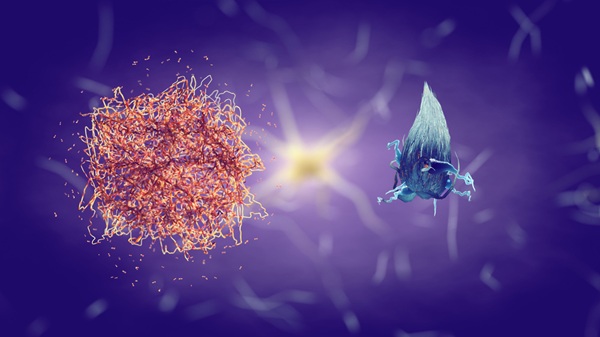
Protease-activated nanoparticles are designed to travel through the body after ingestion or inhalation. When they encounter cancer-linked proteases, the peptides on their surface are cleaved, releasing fragments that are filtered into the urine. CleaveNet was trained using publicly available data on around 20,000 peptide–protease interactions, focusing on matrix metalloproteinases. The AI model generates candidate peptide sequences and predicts how selectively and efficiently each will be cleaved by specific proteases of interest.
Using CleaveNet, the researchers successfully designed novel peptide sequences that were highly selective for MMP13, a protease involved in tumor invasion and metastasis. These peptides had not appeared in the training data but showed strong performance in laboratory validation. Compared with earlier trial-and-error approaches, the AI-designed peptides improved specificity, reduced cross-reactivity, and strengthened diagnostic signals, according to the study published in Nature Communications.
AI-designed protease sensors could enable multiplexed detection of cancer signatures using a simple at-home urine test, potentially identifying disease at very early stages or after recurrence. The approach may also support the detection of dozens of cancer types by combining sensors for different enzyme classes. In addition to diagnostics, CleaveNet-designed peptides could be incorporated into targeted cancer therapies, allowing drugs to be released only within tumor environments, reducing side effects and improving efficacy.
Related Links:
MIT
Microsoft Research