Blood Test Formula Identifies Chronic Liver Disease Patients with Higher Cancer Risk
Posted on 15 Dec 2025
Chronic liver disease affects millions worldwide and can progress silently to hepatocellular carcinoma (HCC), one of the deadliest cancers globally. While surveillance guidelines exist for patients with viral hepatitis or cirrhosis, many people with non-viral liver diseases, such as metabolic dysfunction-associated steatotic liver disease (MASLD), are left without clear screening pathways, even though a substantial number develop liver cancer without cirrhosis. This gap increases the risk of delayed diagnosis and poor outcomes. A newly developed clinical risk model now shows it can reliably identify patients at high risk of liver cancer using routine clinical data, regardless of the underlying liver disease.
The approach, developed by investigators at National Taiwan University (Taipei, Taiwan), relies on a simple scoring system derived from widely available patient characteristics and standard blood tests, allowing clinicians to stratify cancer risk and guide surveillance decisions more consistently across diverse chronic liver conditions. In their study, the researchers evaluated the Steatosis-Associated Fibrosis Estimator as a universal predictor of liver cancer risk.
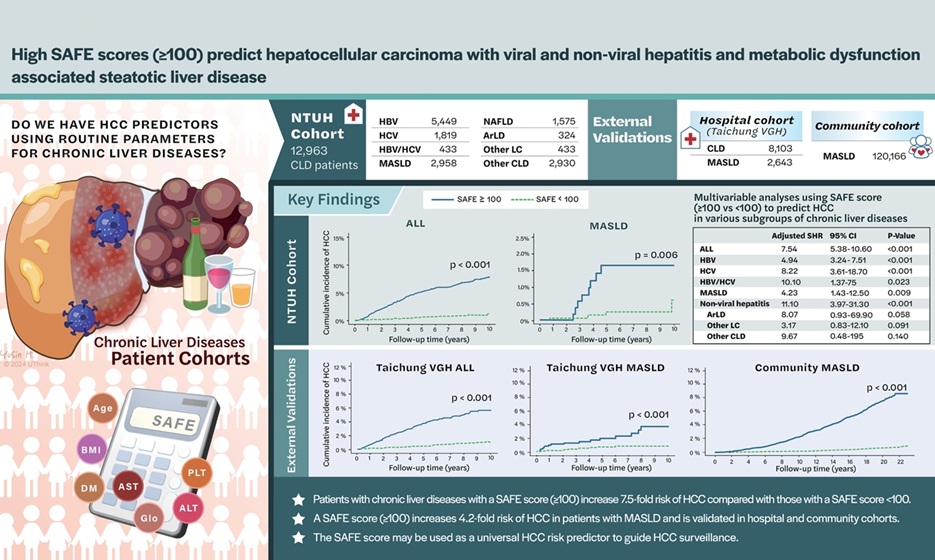
The score incorporates age, body mass index, diabetes status, and routine laboratory values, including aspartate aminotransferase, alanine aminotransferase, platelet count, and globulin levels, making it easy to integrate into everyday clinical practice without specialized testing. To assess performance, the researchers analyzed outcomes from 12,963 patients with different chronic liver diseases in Taiwan over a median follow-up of four years.
The analysis showed that higher scores were consistently associated with a markedly increased risk of developing hepatocellular carcinoma across viral and non-viral liver diseases. The findings, published in the journal Clinical and Molecular Hepatology, show that patients with high scores demonstrated substantially elevated risk compared with those below the threshold, including strong associations in subgroups such as MASLD and non-viral hepatitis.
Importantly, the score also maintained high accuracy in patients receiving antiviral therapy and showed a strong ability to rule out those at low risk, reducing unnecessary surveillance. The robustness of the model was further supported by validation in two independent cohorts, including a large community-based population of more than 120,000 individuals. These findings suggest the score could serve as a universal tool to guide liver cancer surveillance, particularly in patient groups that currently lack dedicated risk assessment methods.
“Our findings strongly suggest that this simple, readily available tool can identify patients at high risk of HCC across all chronic liver disease causes, paving the way for better surveillance guidelines for everyone,” said Prof. Jia-Horng Kao, corresponding author of the study.
“The SAFE score supports an unmet clinical need, allowing us to stratify risk in patients with non-viral conditions like MASLD, encouraging at-risk people to start regular surveillance of HCC,” added Prof. Tung-Hung Su, the study’s first author.
Related Links:
National Taiwan University