AI Tool Outperforms Doctors in Spotting Blood Cell Abnormalities
Posted on 08 Dec 2025
Diagnosing blood disorders depends on recognizing subtle abnormalities in cell size, shape, and structure, yet this process is slow, subjective, and requires years of expert training. Even specialists struggle with difficult cases, and a single blood smear can contain thousands of cells—far more than any human can reliably assess. Researchers have now developed an artificial intelligence (AI) tool that reduces diagnostic variability and flags rare, disease-linked cells with greater precision.
Researchers at the University of Cambridge (Cambridge, UK), in collaboration with University College London (London, UK), have created a generative AI system capable of modeling the full range of normal blood cell appearances while identifying unusual or rare forms. Built using more than half a million peripheral blood smear images, the model learns the distribution of cell morphologies rather than relying on rigid classification rules.
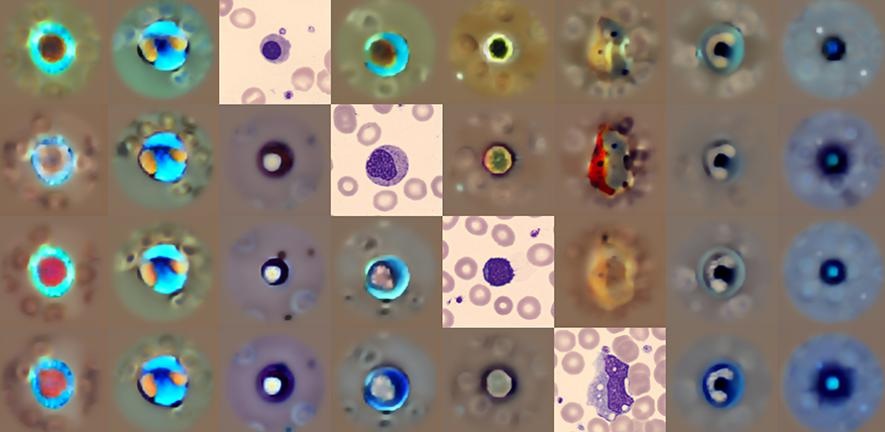
This design allows the system to handle variations caused by different microscopes, staining techniques, and clinical workflows. Unlike conventional AI models trained only to recognize patterns, the tool captures nuanced structural characteristics that distinguish healthy cells from those associated with leukemia or other blood disorders. The model can also quantify its uncertainty, highlighting cases that require expert review.
Testing showed the AI detected abnormal cells with markedly higher sensitivity than existing tools and often exceeded the performance of trained clinicians. The findings, published in Nature Machine Intelligence, demonstrated that the system could maintain accuracy even when trained on reduced datasets and generalized well across previously unseen images. The model also generated synthetic cell images that expert hematologists could not distinguish from real ones.
The researchers released their dataset publicly, offering more than half a million labeled images to support global development of medical AI. They emphasize that the system is intended to triage routine cases and elevate suspicious findings, not replace clinical judgment. Future work will focus on improving processing speed and validating performance across diverse populations to ensure equitable outcomes.
“The true value of healthcare AI lies not in approximating human expertise at lower cost, but in enabling greater diagnostic, prognostic, and prescriptive power than either experts or simple statistical models can achieve,” said co-senior author Professor Parashkev Nachev from UCL. “Our work suggests that generative AI will be central to this mission, transforming not only the fidelity of clinical support systems but their insight into the limits of their own knowledge. This ‘metacognitive’ awareness – knowing what one does not know – is critical to clinical decision-making, and here we show machines may be better at it than we are.”
Related Links:
University of Cambridge
University College London