Diagnostic Technology Performs Rapid Biofluid Analysis Using Single Droplet
Posted on 04 Dec 2025
Diagnosing disease typically requires milliliters of blood drawn at clinics, depending on needles, laboratory infrastructure, and trained personnel. This process is often painful, resource-intensive, and inaccessible in many regions. Existing workflows overlook the rich diagnostic information embedded in the physical changes that biofluids undergo as they dry. Now, researchers have developed an automated imaging and machine-learning system that analyzes how tiny droplets of blood and other fluids dry to distinguish normal from abnormal samples.
The automated system, developed by researchers at the University of Tokyo (Tokyo, Japan), reduces reliance on traditional phlebotomy and expensive consumables by using microscopic imaging to observe biofluid droplets drying in real time. It eliminates the need for specialized diagnostic equipment by using a simple brightfield microscope with a 4x objective lens and a digital camera.
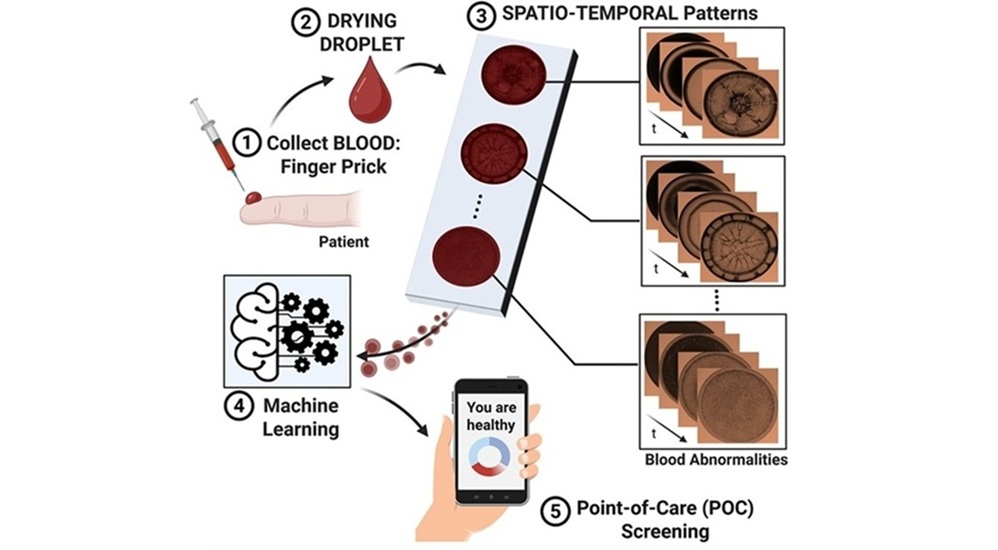
During the drying process, droplets undergo shape changes and internal pattern evolution driven by the movement of proteins, cells, and other biomolecules. These dynamic structural changes are captured frame by frame and then interpreted by a machine-learning algorithm trained to identify disease-associated abnormalities. Because the method relies on naturally occurring drying behaviors, it can also analyze saliva and urine without additional tools.
The research team demonstrated that time-evolving droplet images provide richer diagnostic information than solely examining the final dried pattern. Their machine-learning models accurately distinguished healthy from abnormal biofluid samples across multiple conditions, including diabetes, influenza, and malaria. In validation experiments, published in Science Advances, the researchers confirmed that the real-time drying profile carries a unique signature of the fluid’s composition.
This proof-of-concept work shows how drying-based imaging can serve as a rapid, low-cost diagnostic platform suitable for global deployment, especially in low-resource settings. By relying on tiny droplets instead of venous blood draws, the method enables broader screening, improves accessibility, and reduces medical waste. The researchers envision a portable device or mobile-based workflow that could extend laboratory-grade insights to populations without access to traditional testing. Future work aims to transform the system into a practical point-of-care health-screening tool.
“Such a tool could make health monitoring faster, more affordable and more accessible, especially in communities with limited access to laboratory testing. Ultimately, our goal is to bring laboratory-level insights to the point of care, enabling early detection and preventive health care for everyone,” said Amalesh Gope, co-author of the study.
Related Link
University of Tokyo