Kidney Disease Blood Marker Could Also Identify Cardiovascular Problems
Posted on 10 Oct 2025
Chronic kidney disease (CKD) affects millions worldwide and is strongly linked to cardiovascular complications rather than kidney failure itself. Patients with CKD often experience vascular dysfunction long before symptoms of heart disease appear, yet current biomarkers provide limited predictive value for early detection. Now, a new study has identified an alternative blood marker that could reveal early cardiovascular risks in CKD patients, offering a potential path for earlier diagnosis, intervention, and improved patient monitoring.
Researchers at the University of Texas at Arlington (UTA, Arlington, TX, USA) conducted a study to explore the relationship between vascular health and blood markers in individuals with moderate CKD. Traditionally, scientists have focused on asymmetric dimethylarginine (ADMA) as an indicator of vascular problems. However, the research, published in the American Journal of Physiology–Renal Physiology, found that symmetric dimethylarginine (SDMA), a molecule once considered inactive, shows a stronger correlation with vascular dysfunction than ADMA.
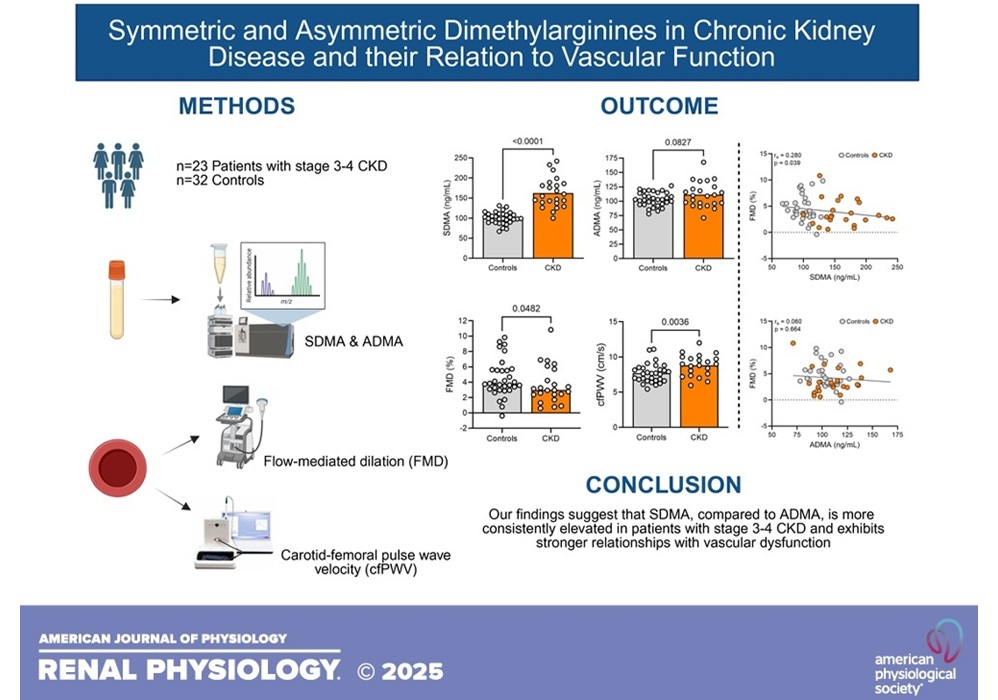
The study examined patients with stage 3 CKD, a phase where intervention is still possible to prevent further cardiovascular damage. The findings revealed that higher SDMA levels, but not ADMA levels, were associated with weaker blood vessel function, suggesting that SDMA may be a more reliable marker for identifying vascular problems early in disease progression. While SDMA correlated strongly with kidney function, its association with vascular impairment was the study’s most significant and unexpected discovery.
Although neither marker perfectly predicts cardiovascular risk, the findings highlight SDMA’s promise as an early indicator of vascular dysfunction in CKD. Measuring SDMA could enable clinicians to detect at-risk patients before kidney failure advances to the point of requiring dialysis. The researchers emphasize that while the correlations were modest, the study paves the way for larger investigations to confirm SDMA’s potential as a clinical biomarker for cardiovascular monitoring in kidney disease.
“The background premise of the study is that people with chronic kidney disease do not die from their kidney problems. They die from cardiovascular disease. We wanted to better understand that connection by examining blood vessel function,” said Paul J. Fadel, lead investigator of the study. “We focused on patients with moderate chronic kidney disease, primarily stage 3, because intervention is still possible to offset the cardiovascular problems that arise with further disease progression and being put on dialysis.”